
TPO roof replacement cost in Houston depends on your roof’s size, condition, membrane grade, and rooftop details. No two buildings are priced the same. For that reason, an on-site inspection is the only way to get an accurate number. Beyond price, most owners also weigh warranty length, energy savings, and storm resistance before choosing a system.
Meanwhile, Houston roofs work harder than most. Gulf Coast humidity, intense UV, and summer heat age membranes faster. Hurricane season and spring hail add even more stress.
As a result, many owners call for TPO roof repair Houston crews can handle in an afternoon. Eventually, though, patches stop working. Similarly, owners searching for TPO repair in South Houston often discover a full replacement is the smarter investment.
This guide explains what drives cost, how the process works, and which warranty fits your building.
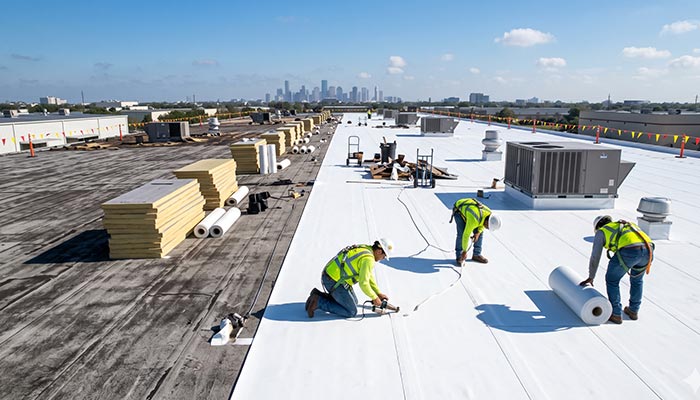
TPO roof replacement cost comes down to materials, labor, and the condition of what sits under the membrane. Below are the factors a contractor weighs when pricing your roof.
TPO, or thermoplastic polyolefin, is a single-ply roofing membrane. It is white, heat-welded at the seams, and manufactured to ASTM D6878.
However, online estimates cannot see wet insulation, deck damage, or hidden flashing problems. Instead, a contractor needs core samples, moisture readings, and a full roof walk. Only then can you compare proposals fairly and confidently.
Marlin Construction LLC offers free on-site inspections and written estimates for Houston property owners.
Replacement makes sense when repairs no longer stop leaks or protect the building. Watch for these warning signs.
Meanwhile, interior signs matter too. For instance, stained ceiling tiles, musty smells, and rising energy bills often point to roof failure.
TPO seam repair in Houston is enough when damage is isolated, and the membrane still welds cleanly. However, widespread failure usually signals replacement.
Ask your contractor to show photos of every problem area. That way, you can see the evidence behind the recommendation.
A professional TPO roof replacement follows a clear sequence from inspection to warranty. Here is what to expect.
Houston’s climate is the biggest threat to any flat roof. TPO roofing handles it well when it is specified correctly.
White TPO reflects sunlight and lowers rooftop temperatures. Consequently, many systems meet Energy Star and cool roof reflectivity standards. Still, constant UV exposure slowly weathers thinner membranes.
Gulf Coast humidity and heavy rain test drainage every week. Over time, standing water stresses seams and promotes algae. Tapered insulation and clear drains help prevent this.
During storms, high winds pull at roof edges and corners first. That is why perimeter fastening and rated edge metal matter so much. Likewise, thicker membranes and cover boards resist hail impact better.
Commercial TPO roofing in Houston works on almost any low-slope building. Here is how it serves common property types.
In addition, homeowners with low-slope sections, porches, or additions can benefit from TPO.
A TPO warranty protects you against material defects, installation errors, or both. Knowing the difference helps you compare proposals.
Manufacturers like Versico, part of Carlisle, only issue top-tier warranties through certified installers. Therefore, contractor credentials matter as much as the product.
TPO roof maintenance in Houston protects your investment and keeps warranties valid. Fortunately, a simple plan goes a long way.
After all, small fixes caught early rarely become big problems. In fact, routine care is the smartest roofing decision you can make.
Marlin serves commercial and residential property owners throughout the Houston region. The team is based in North Houston, 77086.
Of course, each area brings different exposure. For example, League City roofs face stronger coastal winds than inland Cypress roofs.
Owners choose an experienced TPO roofing contractor in Houston, TX for proven results and accountability. Here is what Marlin brings to each project.
Beyond TPO, Marlin also installs PVC, EPDM, modified bitumen, metal roofs, and roof coatings. The team provides roof consulting for capital planning as well.

TPO roof replacement in Houston, TX: 2026 cost, process and warranty guide

TPO Roof Repair vs. Replacement: 7 Signs Your Houston Commercial Roof Needs Help

TPO Roofing Cost in The Woodlands, TX (2026): What Commercial Property Owners Actually Pay

TPO Seam Repair in Houston: Signs, Costs & Fixes After Storm Season (2026 Guide)

TPO Roof Maintenance in Houston: The 2026 Checklist for Commercial Property Owners

Repair or replace? When your Houston TPO roof needs more than a patch

TPO roof replacement in Houston: 2026 cost, timeline and what to expect
There is no single price because every roof is different. Cost depends on roof size, membrane thickness, attachment method, insulation, tear-off needs, rooftop details, and warranty level. A free on-site inspection from a Houston TPO roofing contractor gives you an accurate written estimate for your building.
Most commercial TPO roof replacements take a few days to a few weeks. Timing depends on roof size, tear-off scope, weather, and rooftop equipment. Crews also work in sections, so the building stays dry each night. With careful phasing and planning, most businesses stay open and keep operating throughout.
A well-installed TPO roof can last for decades in Houston with proper care. However, heat, UV, humidity, and storms speed up aging. In addition, thicker membranes and good drainage extend its service life. Regular TPO roof maintenance in Houston also helps keep your manufacturer warranty coverage valid.
Repair makes sense when damage is limited, and the membrane is still flexible. Replacement is smarter when leaks keep returning, seams fail widely, or insulation is wet. For this reason, start with a TPO roof repair Houston inspection. Moisture testing then shows which option protects your building best.
Yes, TPO seams can usually be repaired by heat-welding a new patch over the open area. TPO seam repair in Houston works best on membranes that are still flexible. However, old material sometimes resists welding. In that case, the membrane is too weathered, and full replacement becomes the better choice.
Schedule a professional inspection twice a year, ideally in spring and fall. Also inspect after hurricanes, hailstorms or high winds. Routine TPO roof maintenance in Houston catches open seams, clogged drains, and loose flashing early. As a result, small issues get fixed before they become leaks or interior damage.
It depends on the type. Manufacturer warranties cover membrane defects, while NDL warranties also include labor for covered leaks. Workmanship warranties cover installation errors. Before you sign, ask about required maintenance and transferability. Also check for any wind speed or hail size limits in the terms.
Yes, when it is designed and installed for high winds. Strong perimeter fastening, properly rated edge metal and the right attachment method help TPO resist uplift. Ask your contractor which FM wind uplift rating fits your building. Then plan the work well ahead of time, before the next hurricane season arrives.
Insurance may cover wind or hail damage, depending on your policy. Document damage quickly with photos and a professional inspection report. Next, work with a roofing contractor experienced in claims. They can show the adjuster what failed and whether you need TPO roof repair in Houston or a full replacement.
Sometimes, yes. A roofer installs new TPO over an existing roof if the deck and insulation are dry and sound. However, building code limits roof layers, and wet insulation must be removed. Fortunately, a core sample taken during inspection shows whether a repair or full tear-off suits your property.
A TPO roof replacement in Houston is priced by your roof’s size, condition, details, and warranty goals. Meanwhile, the right system must stand up to Gulf Coast heat, humidity, hurricanes, and hail. Small problems may only need TPO seam repair in Houston. However, repeated leaks and wet insulation usually mean it is time to replace.
Whatever stage your roof is in, start with facts. Schedule a free roof inspection and written estimate with Marlin Construction LLC today. The team handles everything from TPO roof repair Houston calls to full replacements and ongoing TPO roof maintenance in Houston.
Call (713) 444-5202 to book your inspection. For leaks or storm damage, 24/7 emergency service is available.












10403 Kansack Lane
Houston, TX 77086
Call: (713) 444-5202
Hours of Operation
Monday – Saturday
7:00am – 6:00pm
Sunday – Closed
