
If you are budgeting for TPO Roofing in The Woodlands TX, the cost depends on your building, not a fixed chart. Membrane thickness, insulation, tear-off needs, and roof access all shape the final figure. That is why an on-site inspection is the only reliable way to get an accurate, written estimate.
Still, you can understand what drives the number before anyone climbs a ladder. This guide explains each factor in plain language. As a result, you can read contractor proposals with confidence.
Marlin Construction LLC has delivered commercial roofing in The Woodlands and across North Houston since 2004. Our in-house crews install, inspect, and service TPO roofing systems every week. We also handle roof maintenance and repair, as well as roof accessory products that affect your project scope.
Whether you manage an office park, a medical building, or an HOA clubhouse, the same principles apply. Let’s walk through them.
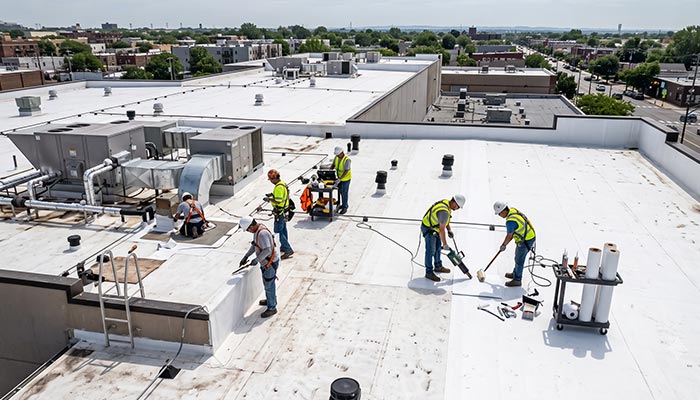
TPO roofing cost per square foot in The Woodlands depends on the system you choose and your roof’s condition. Membrane thickness, attachment method, insulation, tear-off, access, detail work, and warranty level all matter. Because every building differs, two roofs of the same size can carry very different scopes.
TPO membranes typically come in 45, 60, and 80 mil. Thicker sheets resist punctures, foot traffic, and UV wear longer. For that reason, many Woodlands owners choose 60 or 80 mil for long-term buildings.
How the membrane is secured changes labor and materials. Common options include:
Each method suits different decks, wind zones, and noise limits.
Polyiso insulation sets your roof’s R-value and affects energy use. Tapered insulation creates slope so water drains instead of ponding. Meanwhile, a cover board adds impact and hail resistance over the insulation.
A recover installs new TPO over a sound existing roof. A full tear-off removes old layers down to the deck. However, codes limit how many roof layers a building may carry.
Larger roofs often spread setup work across more area. On the other hand, tall buildings, tight lots and limited staging add logistics. Crane access and material hoisting also factor in.
Wet insulation and damaged decking must be replaced before new TPO goes down. An infrared or core-cut moisture survey reveals hidden problems early. Consequently, fewer surprises appear once work begins.
Curbs, pipes, HVAC units, drains, scuppers, and parapet walls all need custom flashing. Edge metal must also meet ANSI/SPRI ES-1 securement standards. More details mean more skilled labor.
Roof assemblies must resist wind loads calculated under ASCE 7. In addition, many owners and insurers ask for FM Approved assemblies. These requirements can change fastener patterns and adhesive coverage.
A manufacturer system warranty covers materials and labor under set terms. An NDL (no-dollar-limit) warranty adds broader protection. Typically, higher warranty tiers require thicker membranes and stricter inspections.
Medical offices, schools, and restaurants often stay open during work. Phased installs, quiet hours, and odor control may be needed. As a result, the schedule itself shapes your estimate.
TPO is one of several single-ply roofing choices in The Woodlands. Here is how the main options compare for Gulf Coast buildings.
TPO (thermoplastic polyolefin)
PVC (polyvinyl chloride)
EPDM (rubber membrane)
In short, TPO balances reflectivity, seam strength, and versatility. That said, the right choice depends on rooftop use, exposure and budget goals.
The right path depends on how much of your roof is still sound. Small, isolated leaks usually call for repair. Widespread wet insulation or deck damage points toward replacement. A recovery sits in between when the existing roof is dry and stable.
Ultimately, a professional inspection tells you which category your roof falls into.
The Woodlands sits in a demanding Gulf Coast climate. Heat, humidity, UV, hurricanes, and hail all push roof systems hard. Consequently, local conditions influence which TPO specs make sense.
For example, a medical office near Research Forest Drive may need stronger edge securement than a sheltered retail strip. Similarly, a warehouse in Spring may focus on drainage across a wide, flat deck.
Roof accessory products protect both the membrane and the people who work on it. They also shape your scope, so plan for them early.
In many cases, adding these items during installation is simpler than retrofitting later. Besides, insurers and facility safety teams often expect them.
A new TPO roof performs best when someone checks it on a schedule. Planned roof maintenance repair work catches small issues before they reach the interior. Moreover, most manufacturer warranties require documented upkeep.
A solid maintenance plan usually includes:
As a result, facility managers can plan capital budgets instead of reacting to leaks. HOA boards also gain clear records to share with residents.
Compare estimates by scope, not just the bottom line. Two proposals may look similar yet describe very different roofs. Use this checklist to line them up fairly.
Also, remember that Texas has no state roofing license. Therefore, manufacturer certifications, insurance and bonding become your main proof of qualification.
Marlin Construction LLC brings two decades of low-slope experience to every TPO roof installation in The Woodlands TX. Since 2004, our crews have installed over 5,000,000 square feet of TPO and PVC.
We also serve Cypress, Katy, Sugar Land, League City, and Pasadena.

TPO roof replacement in Houston, TX: 2026 cost, process and warranty guide

TPO Roof Repair vs. Replacement: 7 Signs Your Houston Commercial Roof Needs Help

TPO Roofing Cost in The Woodlands, TX (2026): What Commercial Property Owners Actually Pay

TPO Seam Repair in Houston: Signs, Costs & Fixes After Storm Season (2026 Guide)

TPO Roof Maintenance in Houston: The 2026 Checklist for Commercial Property Owners
Repair or replace? When your Houston TPO roof needs more than a patch

TPO roof replacement in Houston: 2026 cost, timeline and what to expect
It depends on your building. Membrane thickness, insulation, tear-off, roof access, detail work and warranty level all shape the figure. Because no two roofs match, an on-site inspection is the only way to get an accurate number. Marlin provides a free inspection and a written estimate for TPO roofing in The Woodlands.
A well-installed TPO roof can serve for decades in The Woodlands. However, lifespan depends on membrane thickness, installation quality and upkeep. Thicker sheets resist UV and heat longer. In addition, regular roof maintenance repair visits catch seam and flashing wear early, so the system keeps performing year after year.
Repair fits when leaks are isolated, and the insulation stays dry. Replacement fits when moisture has spread, or the deck is damaged. A recover may work if only one dry roof layer exists. Our TPO repair in The Woodlands starts with a moisture survey, so you know exactly which option your roof truly needs.
Many commercial policies cover sudden wind or hail damage, though terms vary widely. Therefore, document damage soon after a storm with photos and a professional report. Marlin inspects roofs after hurricanes and hail, then provides clear findings you can share with your insurer and adjuster during the claim process.
Most TPO systems offer a manufacturer warranty covering materials, and often labor too. Higher tiers, such as NDL warranties, add broader protection. Typically, these require certified installers and specific specs. As a Versico and Holcim Elevate certified contractor, Marlin can offer manufacturer-backed TPO roofing warranties.
Yes, in most cases. Crews can phase work by section, limit noise during business hours, and control odors near air intakes. For example, medical offices and schools often stay fully operational. We plan commercial roofing in The Woodlands around your tenants, so daily operations continue with minimal disruption.
A white TPO membrane reflects much of the sun’s heat rather than absorbing it. As a result, rooftop temperatures drop, and cooling systems work less. Pairing the membrane with proper polyiso insulation improves performance further. This makes TPO roofing a practical choice for buildings facing long Gulf Coast summers.
Plan for inspections at least twice a year, in spring and fall. Also schedule a check after any hurricane, hailstorm or high-wind event. Regular roof maintenance repair visits keep warranties valid and catch small problems early. Consequently, you avoid surprise leaks and protect interiors, equipment, and inventory.
Texas has no state roofing license, so look for manufacturer certifications, insurance, and bonding. Ask whether in-house crews do the work. Also review project photos, references, and warranty terms. Marlin brings Versico Gold Medal recognition, certified crews, and owner involvement to every TPO project in The Woodlands area.
Yes. TPO works well on HOA clubhouses, pool buildings, patio covers, and low-slope residential sections. Its heat-welded seams resist leaks where water drains slowly. Additionally, roof accessory products like walkway pads protect the surface during service. We help HOA boards and homeowners compare options clearly.
TPO roofing in The Woodlands TX is priced by scope, not by guesswork. Membrane thickness, insulation, deck condition, detail work, and warranty level drive the final number. Local weather and building use shape those choices too.
The next step is simple. Schedule a free on-site roof inspection and written estimate with Marlin Construction LLC. We cover commercial roofing in The Woodlands, TPO repair in The Woodlands, and ongoing roof maintenance and repair plans.
Call (713) 444-5202. Our team is available Monday through Saturday, 7 AM to 6 PM. Meanwhile, 24/7 emergency service is ready for urgent leaks and storm damage.












10403 Kansack Lane
Houston, TX 77086
Call: (713) 444-5202
Hours of Operation
Monday – Saturday
7:00am – 6:00pm
Sunday – Closed
