
A small leak over a warehouse office rarely stays small in Houston. Heat, heavy rain and storm winds test every seam on a flat roof. So when water shows up, you face a real choice about TPO roof repair in Houston. Should you patch the problem, or is it time for a new roof?
TPO roof repair in Houston often solves the issue quickly. However, some roofs have simply reached the end of their service life. Knowing the difference protects your building, your tenants, and your budget.
This guide explains how long TPO lasts on the Gulf Coast. You will learn the signs that indicate it’s time for repair or replacement. Marlin Construction LLC, a commercial roofing contractor in Houston, TX, has worked on low-slope roofs across Texas since 2004. As a TPO roofing contractor in Houston, the team knows how local weather shapes these decisions.
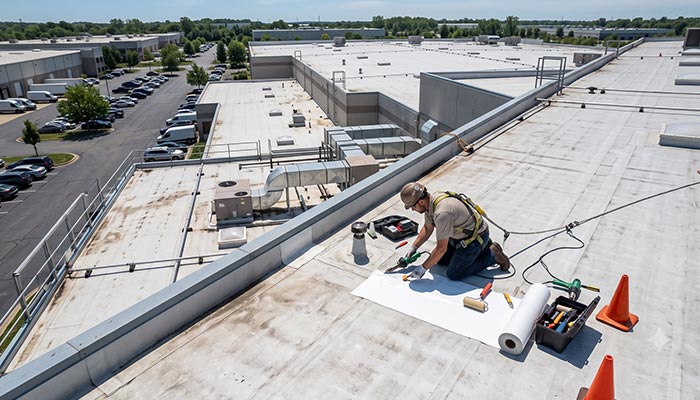
A well-installed TPO roof typically lasts about 15 to 20 years in Houston. Intense UV, summer heat, high humidity, and storm damage can shorten that span. Regular inspections, prompt repairs, and reflective coatings help a membrane reach the top of that range.
National estimates often run longer. However, those figures assume milder weather than Harris County delivers. Rooftops can bake well past the air temperature on summer afternoons.
Installation quality matters just as much. For example, poorly welded seams fail early no matter how thick the membrane is. Insulation, drainage design, and membrane thickness shape how long the system holds up.
Maintenance is the variable you control. Therefore, a roof checked twice a year and after major storms usually outlives a neglected one.
Houston weather attacks TPO from several directions at once. Understanding each one helps you spot trouble early.
TPO is a white single-ply membrane designed to reflect sunlight. Even so, years of strong UV slowly break down its top layer. Eventually, the surface can chalk, crack, or lose flexibility.
Gulf Coast humidity rarely lets a roof dry out completely. As a result, small openings let moisture reach the insulation below. Wet insulation loses its value and can lead to mold and deck damage.
A flat roof should shed rainwater within about two days. When water sits longer, it adds weight and speeds up membrane aging. In addition, standing water finds weak seams faster.
Hot afternoons and sudden storms make the roof expand and contract. Over time, this movement strains seams, flashing, and fasteners. Flashing is the membrane or metal that seals edges, walls, and penetrations.
Many leaks come from isolated problems that a skilled crew can fix. Repair usually makes sense when damage is limited, and the membrane is still flexible.
Look for these repair-level issues:
A seam is the heat-welded joint where two TPO sheets meet. When one seam fails, a technician can clean the area and re-weld or patch it. Similarly, flashing leaks often need targeted TPO membrane repair rather than a new system.
Timing matters here. Because Houston storms arrive fast, a small leak left alone can soak insulation within one season.
At some point, repairs stop adding real value. Replacement becomes the smarter path when problems are widespread or keep coming back.
Membrane shrinkage happens when TPO pulls tight and tents at walls and corners. Once it spreads across the roof, patches cannot relieve the stress.
Wet insulation under the membrane weakens the whole assembly. Moreover, it hides damage you cannot see from the surface. An infrared scan or core sample shows how far moisture has spread.
One leak is usually a repair. However, a new leak after every storm often means the membrane is failing overall.
A roof nearing 18 to 20 years may not justify further investment. In that case, planning a TPO roof installation in Houston protects your building before an emergency forces the decision.
Storms drive some of the most urgent calls for flat roof repair in Houston. Hurricane season runs from June through November, and spring often brings hail.
After a major storm, follow these steps:
Hail can bruise TPO without leaving an obvious hole. Consequently, a trained inspector should check for membrane fractures and crushed insulation board. Strong wind can peel back edges and loosen flashing.
When water is entering the building, emergency commercial roof repair in Houston comes first. A temporary cover limits interior damage while you plan permanent work.
Preventive care is the most reliable way to stretch a roof’s lifespan. Regular care catches small issues before they become major repairs.
A strong maintenance plan usually includes:
Roof coatings add another layer of UV protection. For example, a reflective coating over a sound membrane may extend service life and keep the building cooler. However, coatings will not fix saturated insulation or a failing roof deck.
Most TPO manufacturers set rules about who can repair their roofs. If an unapproved crew does the work, your warranty could be at risk.
Before you schedule work, check these points:
Keep all invoices, photos, and inspection reports in one place. That way, you will have clear records if a claim ever arises.
A thorough inspection gives you facts before you choose between repair and replacement. It turns guesswork into a clear plan.
A complete inspection typically reviews:
After the visit, you should receive photos and clear recommendations. That report helps you plan repairs now and replacement later.
The right TPO contractor matters as much as the right materials. After all, a poor repair can void a warranty or hide a bigger problem.
Look for a commercial TPO roofing contractor that offers:
Marlin Construction LLC works with factory-trained, in-house technicians. The company has installed more than five million square feet of TPO and PVC. In addition, it has earned the Versico Gold Medal Quality Award for eight years in a row.
Marlin operates from its North Houston base in the 77086 ZIP code. From there, crews serve commercial and residential properties across Harris County.
Service areas include:
Because the team is local, it understands Gulf Coast roofing challenges firsthand. That local knowledge shapes every repair and replacement recommendation.

TPO roof replacement in Houston, TX: 2026 cost, process and warranty guide

TPO Roof Repair vs. Replacement: 7 Signs Your Houston Commercial Roof Needs Help

TPO Roofing Cost in The Woodlands, TX (2026): What Commercial Property Owners Actually Pay

TPO Seam Repair in Houston: Signs, Costs & Fixes After Storm Season (2026 Guide)

TPO Roof Maintenance in Houston: The 2026 Checklist for Commercial Property Owners

Repair or replace? When your Houston TPO roof needs more than a patch

TPO roof replacement in Houston: 2026 cost, timeline and what to expect
Yes, in many cases. Punctures, single seam failures, and flashing leaks are usually repairable. The membrane must still be flexible, and the insulation must be dry. A TPO roofing contractor in Houston can test the surrounding material and confirm whether a repair will hold. Widespread damage, however, often points to replacement.
Hail damage often looks minor from the ground. Check for dented metal vents, cracked coatings, and new leaks inside the building. Bruised TPO may hide fractures that only a trained inspector can find. After hail season, schedule a professional inspection and keep photos for your insurance claim and your records.
Yes. Marlin Construction LLC offers 24/7 emergency service for active leaks and storm damage. Crews can install temporary protection to limit interior damage, then plan permanent commercial TPO roof repair in Houston. Call (713) 444-5202 as soon as it is safe, and move equipment away from any active leaks.
It can if the wrong crew does the work. Many manufacturers require certified contractors and approved materials for repairs. Before scheduling, review your warranty terms and ask about certifications. A qualified commercial TPO roofing contractor can protect your coverage and properly document every repair.
Plan on two inspections each year, usually in spring and fall. You should also schedule a check after hurricanes, hailstorms or strong winds. Regular visits catch loose seams, clogged drains, and flashing problems early. As a result, small repairs stay small, and your roof can reach its full service life.
Most seam failures come from poor welding, heat cycling, ponding water or foot traffic. Houston heat makes roofs expand and contract daily, which stresses every joint. Over time, weak welds lift and let water in. A technician can probe seams during inspections and re-weld sections that show early signs of failure.
Yes, TPO is a strong fit for the Houston climate. Its white surface reflects sunlight and helps reduce cooling demand. When installed correctly, heat-welded seams resist leaks. For best results, pick an experienced partner for TPO roofing in Houston. Pair the roof with a regular maintenance plan to extend its life.
No. A coating adds UV protection and can extend the life of a sound membrane. However, it cannot seal open seams, fix punctures or dry out wet insulation. Repairs must come first. After that, a properly applied coating can help your roof handle Houston heat and delay a full replacement. Ask your roofer to confirm the membrane is dry first.
Yes. TPO works well on low-slope residential roofs, patio covers, townhomes, and HOA buildings. It offers the same heat resistance and reflective benefits seen on commercial properties. Many HOAs choose TPO for shared flat roofs. Repairs are straightforward, and maintenance is easy to schedule across buildings.
Look for a local company with manufacturer certifications, in-house crews, and emergency service. Marlin Construction LLC is based in North Houston and serves Harris County, Spring, The Woodlands, Katy, and nearby areas. Its team handles TPO roof installation in Houston along with repairs, coatings, and maintenance plans.
Repair or replacement depends on roof age, the spread of damage, and insulation condition. Isolated punctures and seam issues usually call for targeted TPO roof repair in Houston. Meanwhile, widespread shrinkage, wet insulation, and repeated leaks often signal that replacement is due.
Either way, a professional inspection gives you the facts. With clear photos and recommendations, you can protect your building and plan with confidence.
If your roof is leaking or aging, a local expert can help you choose the next step. Marlin Construction LLC provides commercial roofing in Houston, including inspections, repairs, coatings, and TPO roof installation. Call (713) 444-5202 or request a free estimate to get started.












10403 Kansack Lane
Houston, TX 77086
Call: (713) 444-5202
Hours of Operation
Monday – Saturday
7:00am – 6:00pm
Sunday – Closed
