
Houston roofs work harder than most. Summer heat bakes the surface for months, and sudden downpours test every seam. Then hurricane season arrives with wind and driving rain.
For that reason, TPO roof maintenance in Houston is not optional for building owners. A white single-ply membrane can perform for decades. However, it only does so when small problems are caught early.
This guide comes from the team at Marlin Construction LLC, a Houston commercial roofing contractor since 2004. As a commercial TPO roofing contractor, we inspect flat roofs across Harris County every week. Below, you will learn what a proper inspection covers, when to schedule one, and how maintenance protects your warranty.
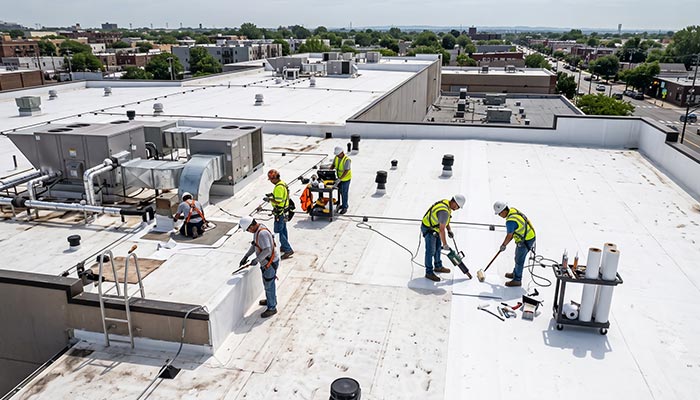
A TPO roof maintenance inspection is a full review of the membrane, seams, flashings, drains, edges, and rooftop equipment. The inspector also checks for interior leaks and moisture. Finally, every finding is photographed and summarized in a condition report with clear repair priorities.
In short, a complete inspection covers these areas:
TPO roofing in Houston faces a harsher climate than the product brochures suggest. Heat, humidity, and storms all stress the membrane at once. As a result, a planned schedule beats waiting for a leak.
TPO reflects sunlight well, which keeps buildings cooler. Even so, constant UV exposure slowly weathers the top surface. Over time, dirt and algae can dull that bright white finish.
Humidity adds another layer of stress. Moisture feeds mold and algae growth on shaded roof areas. Meanwhile, daily heating and cooling makes the membrane expand and contract. That movement pulls on seams, fasteners, and flashing details.
Hurricane season runs from June through November along the Gulf Coast. During that stretch, high winds can lift loose edges and peel back membrane. Wind-driven rain then finds any weak seam or open penetration.
Spring brings a different threat. Hail can bruise or puncture the membrane without leaving obvious marks. Because of this, many hail-damaged roofs look fine from the ground but leak weeks later.
A thorough checklist keeps inspections consistent year after year. Each item below targets a known failure point on TPO roofs. Together, they form the core of any preventive TPO roof maintenance plan.
First, the inspector walks the entire field of the roof. They look for punctures, cuts, blisters, and shrinkage. Next, they check for surface cracking or exposed scrim, which signals aging.
Dirt buildup matters too. A dirty roof absorbs more heat and hides small defects. For this reason, TPO membrane maintenance often includes gentle cleaning with approved products.
Seams are the most common leak source on single-ply roofs. The technician probes each seam with a blunt tool to find weak spots. In addition, they look for gaps, wrinkles, and fishmouths along the laps.
Any open seam gets marked and photographed. After that, a trained crew can re-weld it with the right equipment. Quick seam repairs stop water before it reaches the insulation.
Every pipe, vent, and HVAC curb creates a hole in the roof. Therefore, these details need close attention on every visit. The inspector checks pipe boots, pitch pans, and wall flashings for separation.
Sealant also deserves a look. Houston heat dries out sealant faster than many owners expect. Once it cracks, water can slip behind the flashing unnoticed.
Flat roofs depend on steady drainage. Consequently, clogged drains are one of the biggest threats to a TPO roof. Leaves, debris, and even tennis balls can block water flow.
The inspector clears drains and scuppers and checks strainers. They also note any areas where water ponds after rain. Standing water adds weight, speeds wear, and often points to structural sagging.
Roof edges take the brunt of wind uplift. Loose edge metal can let wind get under the membrane. From there, a small gap can become a large peel-back during a storm.
For that reason, the technician checks fasteners, cleats, and coping joints. They confirm that terminations are tight and sealed. Before hurricane season, this step matters more than any other.
HVAC service crews walk on roofs often. Dropped tools and sharp screws can puncture the membrane. Likewise, heavy foot traffic can wear through the surface near equipment.
The inspector looks for debris left behind by other trades. They also check whether walkway pads are in place. Adding protective pads along service paths prevents repeat damage.
Some problems show up inside before they appear on the roof. As a result, a good inspection includes a quick interior walk. Ceiling stains, musty odors, and damp insulation all tell part of the story.
When leaks are suspected, moisture testing may follow. Infrared scans or core samples can reveal wet insulation hidden under dry membrane. Finding that moisture early helps avoid larger tear-offs later.
Finally, every finding should be photographed and logged. A clear report shows the issue, its location, and a recommended fix. Owners can then plan repairs by priority rather than by emergency.
These records also support insurance claims and warranty requests. At Marlin Construction LLC, every inspection ends with a photo report for your files.
Most Houston flat roofs should be inspected at least twice a year. Additional checks should follow any major storm. Here is a practical seasonal rhythm for local buildings.
After spring storms pass, schedule a detailed walk of the field. Look for bruising, punctures, and damaged rooftop units. Early documentation also helps if an insurance claim becomes necessary.
Before June, focus on anything the wind could grab. Secure edge metal, coping, and loose equipment. In addition, clear every drain so heavy rain can leave quickly.
Once a storm clears, inspect the roof as soon as it is safe. Wind damage is not always visible from the ground. Meanwhile, emergency dry-in work can stop interior damage from spreading.
Autumn is a good time for a full condition review. Clean the membrane, reseal tired flashings, and update your repair plan. That way, you enter the next year with a clear budget picture.
Preventive care fixes small issues before they turn into leaks. Reactive repairs, by contrast, happen after water has already entered the building.
The difference shows up in several ways:
In other words, a commercial TPO roof maintenance program in Houston is a planning tool. It turns surprises into scheduled line items.
Most manufacturer warranties require owners to maintain the roof properly. If you skip inspections, a future claim may be questioned or denied. Therefore, documented maintenance is part of protecting your investment.
Warranties also expect repairs to follow the manufacturer’s specifications. Using an uncertified crew can create problems during a claim review. Before any work begins, confirm that your contractor understands your specific warranty terms.
Some warning signs call for an inspection right away. Watch for any of the following:
If you notice even one of these, schedule a professional visit. Small defects on flat roofs rarely stay small for long.
Maintenance extends roof life, but no roof lasts forever. At some point, owners must decide between repair, restoration, or replacement.
Repairs make sense for isolated issues on an otherwise healthy roof. Restoration with a compatible coating may suit a roof with a sound substrate. However, widespread wet insulation or failing seams usually point toward replacement.
A detailed inspection makes this choice clearer. When replacement is the right call, experienced TPO roof installation in Houston protects your building for years to come.
The right TPO roofing contractor in Houston will explain findings clearly and document every step. They should also have deep experience with single-ply systems in this climate.
Before you commit, ask a few direct questions:
Clear answers to these questions show that a contractor takes maintenance seriously.
Certified installers are trained on the specific system on your roof. As a result, their repairs match the manufacturer’s standards. That alignment helps keep warranty coverage intact.
Marlin Construction LLC has earned the Versico Gold Medal Quality Award for eight straight years. Our factory-trained, in-house technicians have installed more than five million square feet of TPO and PVC roofing.
Marlin Construction LLC is based at 10403 Kansack Lane in North Houston (77086). From there, our crews support commercial roofing in Houston and across Harris County.
We also provide TPO roof maintenance in Houston TX, and nearby communities, including:
Each of these areas shares the same Gulf Coast heat, humidity, and storm exposure. Consequently, the same preventive approach works well from Katy to League City.

TPO roof replacement in Houston, TX: 2026 cost, process and warranty guide

TPO Roof Repair vs. Replacement: 7 Signs Your Houston Commercial Roof Needs Help

TPO Roofing Cost in The Woodlands, TX (2026): What Commercial Property Owners Actually Pay

TPO Seam Repair in Houston: Signs, Costs & Fixes After Storm Season (2026 Guide)

TPO Roof Maintenance in Houston: The 2026 Checklist for Commercial Property Owners

Repair or replace? When your Houston TPO roof needs more than a patch

TPO roof replacement in Houston: 2026 cost, timeline and what to expect
A TPO roof in Houston should be inspected at least twice a year, usually in spring and fall. Schedule an extra check after any major storm or hail event. A TPO roofing contractor in Houston can then tailor the plan. Roof age, condition, and rooftop foot traffic all shape how often visits should happen.
It covers the membrane surface, heat-welded seams, flashings, penetrations, drains, edge metal, and rooftop equipment. The inspector also checks inside for leaks and moisture. Afterward, you should get a photo report. It should list each issue, show where it is, and rank repairs so you can plan.
Start before June with a full inspection. Secure loose edge metal, coping, and rooftop equipment that wind could lift. Next, clear every drain and scupper so heavy rain can exit quickly. A commercial TPO roofing contractor can also re-weld weak seams. They should document the roof’s condition before any storm arrives.
Once it is safe, have a professional check for lifted edges, torn membrane, and seam damage. Look inside for new stains or drips as well. Photo documentation right after a storm supports insurance claims. After a storm, commercial roofing in Houston often needs quick dry-in work. That step stops interior damage from spreading further.
It can. Most manufacturer warranties require owners to maintain the roof and keep records. Missing inspections may give a manufacturer grounds to question a claim. A certified TPO roofing contractor in Houston keeps repairs within warranty specs. They also provide the maintenance records and documentation you need.
A well-installed TPO roof can last for decades in Houston when it receives regular care. Heat, UV, and storms shorten that lifespan if problems go unchecked. Quality TPO roof installation in Houston is the first step. After that, preventive maintenance gives your membrane its best chance at a full service life.
Light debris removal is usually fine, but deep cleaning is best left to professionals. Harsh chemicals, pressure washers, or stiff brushes can damage the membrane. A trained crew uses approved cleaners and methods. That approach keeps the surface reflective and avoids actions that could affect your warranty coverage.
Yes, water that sits for days is a warning sign. It adds weight, speeds membrane wear, and can point to clogged drains or a sagging deck. Clearing drains may solve simple cases. Persistent ponding needs a professional review. In those cases, tapered insulation or drainage upgrades are often the lasting fix for the roof.
Owners can handle simple tasks, such as clearing leaves from drains and noting interior stains. However, seam probing, flashing repair, and heat welding require trained technicians and proper tools. A professional inspection also creates the records your warranty requires, so hiring an experienced crew is the safer path.
Look for a contractor with manufacturer certification, in-house technicians, and deep single-ply experience. Ask for photo reports, emergency storm response, and proof of insurance. A local commercial TPO roofing contractor knows Houston heat and hurricane season. That experience helps them build a plan suited to your building.
TPO roof maintenance in Houston protects your building, your budget, and your warranty. A consistent checklist catches seam, drain, and flashing problems early. Seasonal inspections also prepare your roof for hail and hurricane season.
If you want a trusted commercial TPO roofing contractor for your property, Marlin Construction LLC is ready to help. Schedule your TPO roof maintenance inspection today by calling (713) 444-5202. For storm damage or active leaks, our team offers 24/7 emergency service.












10403 Kansack Lane
Houston, TX 77086
Call: (713) 444-5202
Hours of Operation
Monday – Saturday
7:00am – 6:00pm
Sunday – Closed
