
Introduction: Commercial Roofing Houston TX
If you manage a commercial property in Houston, you have probably asked yourself one question: what does a flat roof replacement actually involve? It is a fair question, and the answer depends on more factors than most property owners expect. Understanding those factors first will help you make a smarter, faster decision when the time comes.
At Marlin Construction LLC, a Houston roofing company with decades of hands-on experience, we walk property owners through this process daily. Whether you are exploring TPO roofing in Houston, comparing metal roofing installation, or simply trying to understand your options, this guide breaks down what drives the scope of a commercial roof replacement project.
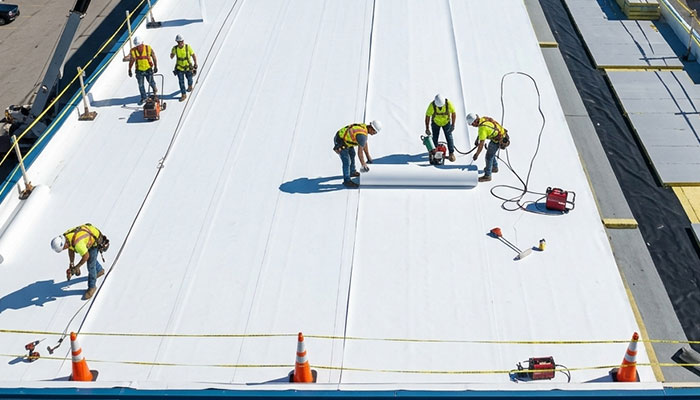
No two commercial roofs are alike, so no two replacement projects look the same. Several variables shape the scope of work before a single materials decision is made.
Larger roofs naturally require more materials, more labor hours, and more coordination. However, layout complexity matters just as much as square footage. Roofs with multiple levels, HVAC units, skylights, or unusual angles take longer to plan and execute.
A roof nearing the end of its lifespan may need a full tear-off, while others can support a recover system. As a result, an accurate inspection is essential before any commercial roofing Houston TX contractor can determine the right approach.
Taller buildings or roofs with limited access points require additional safety planning and equipment. Consequently, this can influence project timelines and crew requirements, even before materials enter the conversation.
Houston’s flat and low-slope commercial roofs depend heavily on proper drainage systems. In turn, local building codes and drainage standards must be factored into the project scope from day one.
Some property owners prioritize extended manufacturer warranties, which can affect installation requirements. Meanwhile, others focus on matching existing roof accessory products already in place on the building.
Houston’s combination of intense heat, high humidity, and severe storm activity makes material selection especially important. Here is how the most common options compare at a high level.
TPO roofing contractor teams in Houston often recommend this material for its reflective surface and energy efficiency. Additionally, TPO handles UV exposure well, which matters given the region’s long, hot summers.
EPDM is a durable, flexible membrane that performs reliably across temperature swings. It has a long track record on commercial properties throughout Texas, particularly where flexibility under thermal stress is a priority.
PVC offers strong chemical resistance, which makes it a common choice for properties with rooftop equipment or nearby industrial exposure. Furthermore, it holds up well in humid, coastal-adjacent climates like Houston’s.
Metal roofing installation appeals to property owners seeking longevity and a distinct aesthetic. Metal systems also perform well during Houston’s storm season, provided they are installed correctly.
For roofs that are not yet ready for full replacement, a roof coating company in Houston can extend the roof’s service life. Coatings add a protective layer; however, they are not a substitute for replacement once a roof reaches structural limits.
It is not always obvious when a roof has moved past the point of routine maintenance. That said, a few warning signs tend to show up consistently.
If any of these sound familiar, it may be time to schedule a professional inspection rather than another round of TPO repair in Houston or spot patching.
Choosing the right contractor affects far more than installation quality. It shapes how well your roof performs for years afterward.
A properly licensed and insured contractor protects your property and your investment. Consequently, this reduces risk throughout the project and beyond.
Houston’s storm season demands contractors who understand regional weather patterns. A local team can respond faster when emergency roof repair or urgent inspections are needed.
Established Houston roofing companies typically maintain strong relationships with material manufacturers. This often translates into better access to roof accessory products and more consistent lead times. Additionally, roof consulting services can help property owners plan capital expenses well in advance.
A contractor who understands commercial roof maintenance Texas requirements can help extend your roof’s lifespan long after installation. This ongoing relationship often proves just as valuable as the original project itself.
Before any work begins, a thorough inspection gives property owners a clear picture of their roof’s condition. During this process, a qualified team typically evaluates the membrane, flashing, drainage systems, and any existing damage.
From there, you receive a detailed assessment along with recommended next steps. This gives facility managers and property owners the information needed to plan budgets and timelines with confidence, without pressure to commit on the spot.

TPO roof replacement in Houston, TX: 2026 cost, process and warranty guide

TPO Roof Repair vs. Replacement: 7 Signs Your Houston Commercial Roof Needs Help

TPO Roofing Cost in The Woodlands, TX (2026): What Commercial Property Owners Actually Pay

TPO Seam Repair in Houston: Signs, Costs & Fixes After Storm Season (2026 Guide)

TPO Roof Maintenance in Houston: The 2026 Checklist for Commercial Property Owners

Repair or replace? When your Houston TPO roof needs more than a patch

TPO roof replacement in Houston: 2026 cost, timeline and what to expect
Watch for recurring leaks, visible membrane damage, ponding water, and rising energy bills. A professional inspection from a Houston roofing company can confirm whether repair or full replacement makes more sense for your property.
Timelines vary based on roof size, material, and weather conditions. Smaller projects may finish in days, while larger commercial roofing Houston TX projects can take several weeks from start to completion.
TPO, PVC, and metal roofing all perform well in Houston’s heat and humidity. The right choice depends on your building’s structure, budget priorities, and long-term maintenance goals, which a roofing consultant can help clarify.
Sometimes, yes. If damage is localized and the membrane is still structurally sound, commercial roof repair Houston services may extend the roof’s life. However, widespread damage usually points toward replacement.
Not entirely. A roof coating company can extend a roof’s service life and improve energy efficiency. That said, coatings work best as a maintenance tool, not a permanent substitute for replacement.
Most experts recommend inspections at least twice a year, plus additional checks after major storms. Regular commercial roof maintenance Texas programs help catch small issues before they become costly repairs.
Ponding often results from poor drainage design, structural settling, or clogged drains. Left unaddressed, standing water accelerates membrane wear and increases the risk of leaks and structural damage.
Local contractors understand regional weather patterns, code requirements, and storm response needs. As a result, they can often respond faster and recommend materials suited specifically to Houston’s climate.
A thorough inspection typically covers the membrane, flashing, drainage systems, and any visible damage. You should receive a clear assessment along with recommended next steps for repair or replacement.
TPO roofing benefits from routine inspections and prompt attention to seams or punctures. Partnering with an experienced TPO roofing contractor in Houston helps ensure the material performs as expected over time.
Understanding what drives commercial roof replacement decisions puts property owners in a stronger position. From material selection to drainage planning, every factor plays a role in the outcome. Working with an experienced Houston roofing company like Marlin Construction LLC ensures those decisions are grounded in local expertise and long-term roof performance.
If your property is showing signs of wear, or if you simply want clarity on your options, scheduling an inspection is the logical next step. Our team supports commercial and residential property owners across Houston with roof consulting services, TPO roofing in Houston, and full-scale replacement projects tailored to your building’s needs. Reach out to Marlin Construction LLC to request a consultation and take the first step toward a roof you can rely on.








10403 Kansack Lane
Houston, TX 77086
Call: (713) 444-5202
Hours of Operation
Monday – Saturday
7:00am – 6:00pm
Sunday – Closed
