
A TPO roof needs restoration when you see chalky surfaces, opening seams, ponding water, or hail bruising. Shrinking edges and small leaks are also warning signs. When the membrane is still mostly sound, a roof coating over TPO roof can extend its life without a tear-off.
Storm season hits Houston roofs hard. Hurricane winds, hail, and heavy rain stress every seam. Meanwhile, Gulf Coast humidity and UV keep wearing the surface down all year. For many building owners, the question is simple. Should you replace the roof or restore it? In many cases, TPO roofing restoration is the smarter first step.
This guide explains the warning signs, the coating process, and the decision factors. It also covers maintenance & repair after storms. As a Houston roofing company, Marlin Construction LLC works on these roofs across Harris County every season.
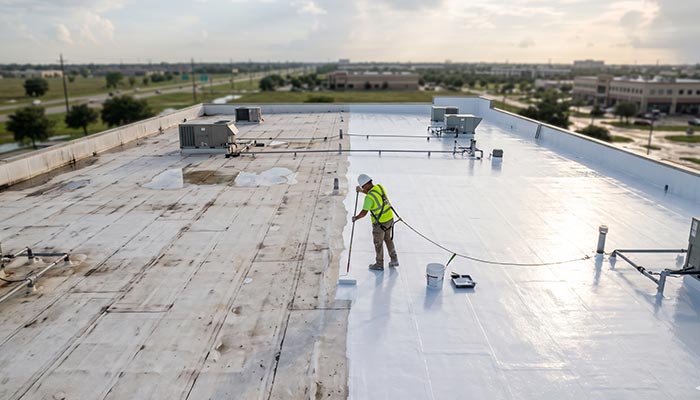
Most TPO roofs show clear warning signs before they fail. Catching them early keeps restoration on the table.
Rub your hand across the membrane. If a white, powdery residue comes off, the top layer is breaking down. Houston’s intense UV speeds up this process on south-facing and open roofs.
TPO seams are heat-welded. Over time, thermal cycling weakens those welds. Hurricane winds can then lift weak seams and let water in.
Water that sits for more than 48 hours after rain is a concern. It accelerates membrane aging and adds load. Low spots near drains are common on older warehouses and retail centers.
Hail season leaves small dents, cracks, and punctures. Some damage is hard to see from the ground. However, even small openings let moisture reach the insulation.
Aging TPO can shrink and tighten. As a result, it pulls at parapets, curbs, and flashings. You may see tenting or stress lines near walls.
TPO has a reinforcing fabric layer called scrim. When the top ply wears thin, that fabric starts to show. At this stage, the roof needs attention soon.
Ceiling stains or drips after heavy rain often point to seam or flashing issues. Fortunately, isolated leaks on a dry roof are usually repairable.
A worn, dirty membrane reflects less sunlight. Consequently, rooftop heat climbs and HVAC units work harder through Houston summers.
Yes, you can coat a TPO roof if the membrane is intact, well attached, and mostly dry. Success depends on cleaning, priming, and testing adhesion first.
TPO (thermoplastic polyolefin) is a single-ply membrane with a smooth, slick surface. That smoothness makes adhesion the main challenge. Without proper prep, coatings can peel within a few seasons.
A reliable TPO membrane coating process includes these checks:
That said, coating is not a fix for every roof. It will not solve wet insulation or structural problems. For guidance on coating systems, the Roof Coatings Manufacturers Association offers useful background.
For single-ply roof coating Houston projects, local climate matters too. Humidity affects drying time. Because of this, crews often plan work for drier fall weeks.
TPO roof restoration follows a set sequence. Each step protects the next one.
A TPO roof recoat later follows a lighter version of these steps. Learn more about our TPO Roofing services.
Silicone is often the strongest fit for flat Houston roofs that hold water. Still, each coating type has trade-offs.
Silicone coating:
Acrylic coating:
Other options (urethane and hybrid systems):
For TPO roof coating Houston projects, drainage often decides the choice. Our Silicone Roof Coating in Houston page explains the system in more detail.
Restoration works when the roof is mostly dry and attached. Replacement is the right call when damage runs deep.
Good candidates for restoration:
Signs replacement makes more sense:
An honest moisture survey is the deciding factor. Coating over wet insulation only traps the problem. In contrast, coating a dry, sound roof can add many years of service.
Almost any low-slope commercial building with a sound TPO roof can benefit. The main draw is less disruption than a full tear-off.
We serve these properties in North Houston (77086), Spring, The Woodlands, Cypress, Katy, Sugar Land, League City, and Pasadena.
TPO roof cost in Houston depends on roof condition, not just size. An on-site inspection gives the only reliable scope.
Key factors include:
Generally, restoration avoids tear-off, disposal, and new insulation. For that reason, owners often weigh it first. Even so, every roof deserves a fair, written comparison.
A post-storm inspection is the best way to protect a coated or aging TPO roof. Small fixes now prevent bigger damage later.
After hurricanes or hail, check for:
Track each storm through the National Hurricane Center so you know when to schedule a check.
Ongoing tips to extend coating life:
Our Maintenance & Repair team handles inspections and storm repairs across Harris County. You can also request a storm damage roof inspection.
A local Houston roofing company understands how Gulf Coast weather affects roofs. That knowledge shapes better product choices and timelines.
Industry groups like the National Roofing Contractors Association also share guidance on choosing a qualified contractor. Ultimately, ask for references, insurance proof, and a written scope before work begins.
Coat or replace? How Houston businesses add 10–20 years to rusting metal roofs

How to choose a commercial roofing contractor in Houston: 12 questions to ask (and red flags)
Aging TPO roof after storm season? How Houston building owners restore instead of replace

Coat or replace? 7 signs your Houston flat roof is a candidate for silicone restoration

Is your Houston TPO roof hurricane-ready? Wind uplift, FM ratings and the 2026 Texas windstorm code explained

7 Signs Your Houston Commercial Roof Needs a Coating (Not a Replacement)

TPO vs PVC vs silicone coating: Which flat roof costs less long-term in Houston?
Yes, you can coat a TPO roof when the membrane is still intact and mostly dry. The surface must be cleaned and primed so the coating bonds well. A Houston roofing company should run adhesion tests first, because aged TPO can repel coatings without the right primer. Those results guide product choice.
Common signs include chalky or faded membrane, opening seams, ponding water, hail bruises, and shrinkage pulling at the edges. Small leaks and higher cooling demand are also clues. After hurricane or hail season, a TPO roofing inspection helps confirm whether restoration still makes sense for your building.
Coating life depends on product type, film thickness, and roof prep. In Houston’s heat, UV, and humidity, routine maintenance and repair matter a lot. Many systems can be recoated again later. That option extends the service life of the same roof without a tear-off, so plan an inspection every year.
Silicone roof coating in Houston is popular for flat commercial roofs. It resists ponding water and holds up well under strong UV. However, it needs a compatible primer on TPO. It also collects dirt over time, so periodic cleaning helps maintain reflectivity. Ask for product data sheets before you decide.
Replacement is the safer path in some cases. Saturated insulation, a damaged deck, or widespread membrane failure all point that way. A moisture survey reveals hidden wet zones. In those cases, coating would trap water. A trusted roofing company will explain the findings and recommend a new system instead.
TPO roof cost in Houston depends on several factors. These include roof size, membrane condition, moisture levels, seam repairs, access, and the coating system chosen. Restoration usually avoids tear-off and disposal. For an accurate scope, request an on-site inspection rather than relying on general online estimates.
Yes, a bright reflective coating can reduce heat absorbed by the roof surface. That often lowers rooftop temperatures during Houston summers. As a result, HVAC units may work less. Results vary by building, insulation, and coating color. Ask for reflectivity ratings from the Cool Roof Rating Council before choosing.
Yes, once the roof is inspected and dried out. Storm damage such as punctures, loose flashing, and opened seams must be repaired first. Commercial roofing in Houston TX often follows a fall timeline. Cooler, drier weeks give coatings better curing conditions, and crews can finish before spring storms arrive.
Usually very little. Restoration happens on the roof surface, so there is no tear-off noise or debris inside. Crews can schedule work around clinic hours, school calendars, or restaurant service. In fact, most occupants of offices, retail centers, and multifamily buildings barely notice the work is happening above them.
Many coating manufacturers offer system warranties when an approved contractor installs the product to spec. Terms depend on the product, thickness, and roof condition. Ask your contractor for written warranty documentation. Also request a maintenance and repair plan, since skipped inspections can affect coverage later.
Storm season leaves its mark on every Houston roof. Chalking, open seams, ponding, and hail bruises are early signs your TPO roof needs attention. Fortunately, a dry and well-attached membrane can often be restored.
A roof coating over TPO roof adds protection without a tear-off. Silicone roof coating in Houston handles ponding and strong UV well. Meanwhile, regular maintenance & repair keeps that protection working longer.
The right choice starts with an honest inspection. Moisture data, not guesswork, should guide whether you restore or replace.
Marlin Construction LLC provides Commercial Roofing in Houston TX for offices, retail centers, warehouses, churches, schools, and HOAs. Our team inspects TPO roofing, documents what we find, and explains your options clearly.
If your roof came through hurricane or hail season with visible wear, schedule a TPO roof inspection with our Houston roofing company. We will help you decide whether restoration fits your building.











10403 Kansack Lane
Houston, TX 77086
Call: (713) 444-5202
Hours of Operation
Monday – Saturday
7:00am – 6:00pm
Sunday – Closed
