
A silicone roof coating in Houston works best on flat roofs that are dry and structurally sound. Ideal candidates leak only at seams or penetrations. It seals the surface, sheds ponding water and reflects heat without a tear-off. However, if a moisture survey finds widespread wet insulation or a damaged deck, full replacement is the better call.
Every flat roof reaches a point where patching stops working. At that stage, you face a clear choice. You can tear off the old system. Or, you can choose a silicone roof coating in Houston that seals what is already there.
The right answer depends on your building. For example, a warehouse manager in North Houston weighs downtime differently than an HOA board in Cypress. Still, both need an honest read on the roof’s real condition.
This guide explains the signs that favor restoration and the signs that point to replacement. It draws on what crews see daily across commercial roofing in Houston, TX. Along the way, you will see how roof coatings, TPO roofing, and commercial roof repair in Houston fit together.
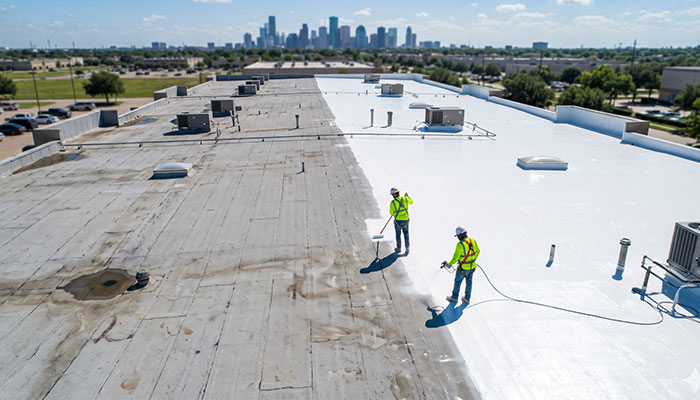
Houston’s climate attacks roofs from every direction. Intense UV breaks down membrane surfaces over time. Meanwhile, summer heat makes materials expand and contract every single day. That constant movement stresses seams and flashings.
Gulf Coast humidity adds another layer of strain. Moisture lingers in the air and in low spots, so algae and mildew spread quickly. Sudden downpours also test every drain and scupper on the roof.
Rooftop equipment adds its own wear. Technicians walk the same paths to reach HVAC units, so traffic lanes break down early. Penetrations for new equipment also create fresh leak points.
Then come the storms. Hurricane season brings wind-driven rain from June through November. In addition, spring hail season can bruise membranes across Harris County. Because these stresses stack up, small defects turn into active leaks faster here.
A roof is a strong restoration candidate when the problems sit on the surface, not inside the system. The seven signs below help you judge that before you book an inspection.
Start by looking at where water enters. If leaks trace back to seams, pipe boots, HVAC curbs or drains, the problem is usually localized. Those details move the most, so they tend to fail first.
That pattern matters because silicone restoration targets exactly these weak points. Crews reinforce them with mastic and fabric before coating the whole field. As a result, the roof becomes one seamless, watertight surface.
On site, Marlin’s team traces each leak to its source and marks every failed detail. That way, flat roof leak repair in Houston becomes part of the restoration rather than a separate job.
You cannot judge wet insulation from the surface. Instead, it takes an infrared scan or moisture meter survey, often confirmed with core cuts. A core cut is a small sample removed to reveal the layers below.
Dry insulation is essential because silicone seals the roof from the top. If moisture is trapped underneath, it has nowhere to escape. Eventually, it causes blisters and lost adhesion.
Marlin begins every restoration assessment with this survey. It maps wet areas, so you see exactly what must be replaced before any coating goes down.
Many low-slope roofs in Houston hold water for a day or two after a storm. Ponding water on flat roof sections speeds up wear on most membranes and acrylic coatings. Silicone, however, resists standing water far better than most other coating types.
That said, ponding is acceptable only when the deck below is still solid. Soft spots, ceiling stains or sagging areas signal deeper damage. In those cases, repairs must come first.
During inspection, crews walk ponding zones, check for deflection and review drainage. Sometimes clearing drains or adding crickets reduces ponding before the flat roof silicone coating is applied.
Older TPO roofing often shows chalking, surface crazing or faded color. Even so, the welded seams may still hold firmly. That combination makes a strong case for aging TPO restoration.
Silicone bonds well to TPO that has been cleaned and primed correctly. Because it adds a fresh, reflective surface, it can extend the working life of the membrane. Many owners weigh this option against TPO roof cost in Houston for a full replacement.
Marlin probes seams, checks for shrinkage at the perimeter and runs adhesion tests. If the membrane passes, coating becomes a practical next step.
Walk the roof and feel for soft or spongy areas. Inside, look for sagging ceilings, rusted joists or water-stained deck panels. Any of these points to structural damage.
Coating cannot fix a failing deck. Therefore, the structure must be sound before restoration makes sense. A healthy deck lets the coating perform for its full design life.
Crews inspect from above and below wherever access allows. This step matters most in older retail centers and in warehouses and flex space around Pasadena and North Houston.
Upper floors that feel hotter each summer often point to the roof. Dark or weathered surfaces soak up sun and push that heat indoors. In turn, HVAC systems run harder and longer.
A white commercial silicone roof coating reflects much of that solar energy. Consequently, roof surface temperatures drop and rooftop units work under less strain. Medical office buildings, schools, and restaurants with heavy cooling demands notice this quickly.
Marlin can take surface temperature readings before and after the work. That gives you a measured comparison instead of a guess.
Tear-offs bring noise, debris, dumpsters, and odors. For a church, school, or multifamily property, that disruption is hard to manage. Likewise, office parks in The Woodlands or Sugar Land cannot easily send tenants home.
Silicone restoration is quieter and cleaner. Crews work on the existing surface, so the roof is never left open. Patients, students, tenants and diners can usually carry on as normal.
Before work starts, Marlin coordinates schedules, access routes, and safety zones with your team. As a result, daily operations stay on track.
No single limit applies to every roof. Instead, each coating manufacturer sets its own wet insulation threshold for warranty approval. Your roof qualifies only when it meets that manufacturer’s standard.
Here is how the decision gets made:
On a typical Houston survey, crews scan the roof in the evening. At that hour, wet areas hold heat longer than dry ones. Next, they mark suspect zones with paint. Core cuts then confirm what the camera shows.
In short, a few wet patches rarely rule out a coating. A roof that is wet across large areas, however, needs a new system. A proper survey turns that judgment into documented fact.
Restoration is not the answer for every building. Honest advice sometimes means recommending a new roof. Replacement is usually the better path when:
In these cases, coating would only delay a bigger problem. A new TPO, PVC, or metal system then becomes the smarter long-term investment.
A good result depends far more on preparation than on the coating itself. Most projects follow these steps:
Each step leaves a record. Photos, survey maps, and thickness readings go into your project file. That documentation also supports warranty claims later.
Weather plays a role as well. Silicone needs a dry surface during application, so crews plan around Houston’s rain patterns. Afterward, the coating cures quickly and sheds water soon after.
Each option suits a different roof and goal. Here is how they compare:
For most Houston flat roofs that hold water, silicone is the strongest choice among roof coatings. Even so, the right option depends on what the inspection reveals.
Restored roofs can carry two kinds of coverage. A manufacturer warranty covers the coating materials, while a workmanship warranty covers the installation. Term length usually depends on the coating thickness applied.
Roof warranties stay valid only with regular care. Plan inspections each spring and after every major storm. In addition, keep drains clear and log any rooftop equipment work.
A simple maintenance & repair plan protects the investment. Later, a fresh silicone recoat can renew protection without another tear-off.
Marlin Construction LLC has served commercial roofing clients across the Houston area since 2004. The team works from North Houston in 77086 and covers Spring, Cypress, Katy, League City, and beyond.
The industry has recognized that quality, too. Marlin earned the Versico Gold Medal Quality Award eight years in a row.
Clients also value direct communication. Owner John Josephs stays closely involved on job sites and answers questions personally.
Above all, Marlin gives straight answers. If your roof is not a good fit for coating, you will hear that clearly, along with the alternatives.
Coat or replace? How Houston businesses add 10–20 years to rusting metal roofs

How to choose a commercial roofing contractor in Houston: 12 questions to ask (and red flags)
Aging TPO roof after storm season? How Houston building owners restore instead of replace

Coat or replace? 7 signs your Houston flat roof is a candidate for silicone restoration

Is your Houston TPO roof hurricane-ready? Wind uplift, FM ratings and the 2026 Texas windstorm code explained

7 Signs Your Houston Commercial Roof Needs a Coating (Not a Replacement)

TPO vs PVC vs silicone coating: Which flat roof costs less long-term in Houston?
A properly applied silicone coating often protects a Houston roof for a decade or more. Lifespan depends on coating thickness, prep work, and ongoing care. Because silicone resists UV and heat well, it holds up in our climate. Regular inspections and a silicone recoat can extend roof life even further.
Silicone handles ponding water better than most roof coatings. It does not soften or break down under standing water. However, it does not remove the water itself. Clearing drains or adding crickets may still help. A trusted Houston roofing company should check the deck under ponding areas before any coating work.
Yes, silicone works over most low-slope surfaces, including TPO roofing, EPDM, metal, and modified bitumen. Each one needs specific prep. For example, aged TPO may need a primer, while metal needs rust treatment. A small adhesion test on your roof confirms the bond before the full application begins.
Each coating manufacturer sets its own wet insulation limit for warranty approval. A moisture survey and core cuts show how much of your roof is wet. Small wet areas are replaced before coating. If moisture is widespread, replacement is the safer choice. The survey results, not guesswork, guide the final decision.
Yes, but only with silicone. Acrylic and most other coatings will not bond to cured silicone. Before recoating, crews clean the surface thoroughly and test adhesion. That makes silicone a long-term commitment. Planned recoats through a maintenance & repair program keep the roof protected for many years.
Yes, silicone roof coating in Houston is a smart pre-storm step for sound roofs. It seals seams and penetrations where wind-driven rain gets in. Ideally, schedule the work in late winter or early spring. That leaves enough time for inspection, repairs, and full curing before storms reach the Gulf Coast.
Usually not. Silicone restoration avoids tear-off, so there is little noise, debris or odor inside. Schools, medical offices, churches, and restaurants often stay open. Crews schedule work around your operations and set up safety zones. Commercial roof repair in Houston can follow the same low-disruption approach.
Most projects include a manufacturer warranty on materials and a workmanship warranty on installation. Coverage terms usually depend on coating thickness and roof condition. Roof warranties stay valid when you follow the maintenance schedule. Ask for both warranties in writing before any work begins on your building.
Your roof likely qualifies if leaks are localized, the deck is solid, and most insulation is dry. A professional inspection with a moisture survey confirms it. Any contractor offering commercial roofing in Houston, TX should share photos and survey maps. That way, you can see the evidence behind the advice.
A silicone roof coating in Houston can add years of service to a roof that is still sound. The key is knowing the roof’s true condition first. A moisture survey turns guesswork into clear evidence.
You might manage an HOA clubhouse in League City or a retail center in Katy. Either way, the process starts the same. Marlin inspects, surveys and explains every option, from roof coatings to full TPO roofing replacement.
Ready to find out where your roof stands? Schedule a roof inspection and moisture survey with Marlin Construction LLC. Call (713) 444-5202 or request a visit through the contact page.











10403 Kansack Lane
Houston, TX 77086
Call: (713) 444-5202
Hours of Operation
Monday – Saturday
7:00am – 6:00pm
Sunday – Closed
