
Your flat roof can usually be restored with a coating if the membrane is mostly dry and well attached. Leaks should also be limited to seams, flashings, or penetrations. To confirm this, Marlin Construction LLC runs a moisture survey before recommending any commercial roof coating in Houston.
Houston is hard on flat roofs. Gulf Coast humidity, intense UV, and long summers break membranes down year after year. Meanwhile, hurricane season and spring hail add sudden stress.
However, an aging roof does not always need a tear-off. In many cases, roof coatings can seal, reflect, and protect the existing system. As a result, owners skip the noise, waste, and downtime of a full replacement.
This guide shares the signs we look for on Houston roofs we inspect. It also explains when commercial roof repair in Houston should come first. Property managers across Harris County can use them to plan the next step in commercial roofing in Houston, TX.
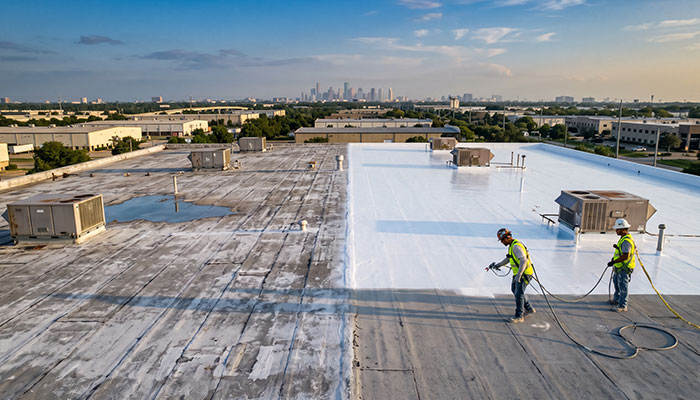
A commercial roof coating is a fluid-applied membrane rolled or sprayed over an existing roof. Once cured, it forms a seamless, waterproof layer. Most systems are white, so they also reflect sunlight.
Each coating chemistry suits different roofs and conditions:
Coatings can also go over EPDM, PVC, and built-up roofs with the right primer. In addition, quality products meet ASTM standards, such as ASTM D6083 for acrylic and D6694 for silicone over SPF. Many reflective products are also rated by the Cool Roof Rating Council.
The signs below reflect what our crews see on Houston rooftops every week. One sign alone may not decide it. Together, however, they point toward restoration instead of replacement.
Run your hand across an older TPO or EPDM roof. A white or gray powder on your palm means the top layer is weathering.
Fine surface cracks on modified bitumen show the same kind of aging. Still, the membrane below is often intact. A coating renews that worn top layer before UV damage goes deeper.
Houston’s long summers speed this process up. Unshaded roofs in open areas like Katy and Cypress tend to chalk sooner.
Leaks around HVAC curbs, pipes, and drains are among the most common calls we get. Usually, the main field of the roof is still sound.
Because the problem is localized, crews can repair and reinforce it. They embed polyester fabric at seams and flashings, then coat the whole surface. As a result, those weak points sit under one seamless layer.
For example, many retail centers and restaurants have dozens of rooftop penetrations. Each one can open up after a heavy Gulf storm.
Water that sits on a roof for more than 48 hours after rain is called ponding water. Over time, it wears down many membranes and adds weight to the deck.
If the roof is still dry and solid underneath, silicone is a strong answer. It resists standing water better than most coatings. That makes it a practical flat roof coating for Houston’s sudden downpours.
Even so, drainage deserves a look too. Clearing drains or adding crickets may be part of the plan.
Are top-floor tenants complaining about heat? Is your HVAC running longer each summer? A dark or dirty roof could be soaking up the sun.
Fortunately, a cool roof coating in Houston reflects sunlight and releases absorbed heat. Reflective performance is measured by the Solar Reflectance Index. Consequently, the roof surface stays cooler, and rooftop equipment works less.
Office parks and medical office buildings often notice the comfort gains first. Their occupants feel indoor heat quickly.
Metal roofs on warehouses and flex space across North Houston often show surface rust first. Loose or backed-out fasteners follow as panels expand and contract in the heat.
If the panels are still structurally sound, a warehouse roof coating in Houston is often the smarter path. Crews treat rust, reset or replace fasteners, and seal panel laps. Then a primer and coating lock out moisture.
Similarly, industrial roof coating systems help protect plants near Pasadena from humid, salty Gulf air.
This sign is invisible from the ground, yet it matters most. A coating only works when the insulation below is mostly dry.
We confirm this with a moisture survey or infrared scan. Core cuts then verify the readings. If wet areas are limited, crews remove and replace them before coating.
After hurricane season, this check becomes even more important. Wind-driven rain can push water under flashings without obvious interior leaks.
Many TPO roofing systems around Houston are reaching the end of their original roof warranties. Yet the membrane is often still well attached.
Instead of waiting for leaks, owners can restore the roof while it still qualifies. Moreover, a qualified installation may come with a new manufacturer warranty.
This timing matters for HOAs and multifamily owners. They usually plan capital projects years.
Honesty matters here. A coating is not a cure for every roof. Replacement is usually the better path when:
In these cases, a coating would only hide the problem. Therefore, we recommend replacement and walk you through the options clearly.
Every recommendation starts on the roof, not in a sales office. Here is how our roof inspection works:
We also explain roof warranty options and ongoing maintenance and repair plans. That way, the restored roof stays protected for years.
Since 2004, our crews have installed more than 5,000,000 square feet of TPO and PVC roofing across Texas. Marlin has also earned the Versico Gold Medal Quality Award for eight straight years.

7 Signs Your Houston Commercial Roof Needs a Coating (Not a Replacement)

TPO vs PVC vs silicone coating: Which flat roof costs less long-term in Houston?
Storm-damaged flat roof? Houston commercial roof repair guide for 2026–2027

How to choose a TPO roof coating contractor in Houston: 10 questions to ask before you sign

TPO roof replacement in Houston, TX: 2026 cost, process and warranty guide

TPO Roof Repair vs. Replacement: 7 Signs Your Houston Commercial Roof Needs Help

TPO Roofing Cost in The Woodlands, TX (2026): What Commercial Property Owners Actually Pay
Most commercial roof coatings in Houston last 10 to 20 years. Lifespan depends on the coating type, applied mil thickness, and surface prep quality. Regular inspections help it last longer. Because the system is recoatable, a fresh layer can extend its life again before the first coating wears through.
Yes, aging TPO roofing is often a strong candidate for a coating. The membrane must be well attached and mostly dry. First, crews clean the surface, repair seams, and apply a primer made for single-ply roofs. Then they apply silicone or another compatible coating at the manufacturer’s specified mil thickness.
Silicone is usually better for flat roofs that hold water after Houston storms. It resists ponding and UV breakdown. Acrylic roof coating suits metal and well-drained low-slope roofs instead. Before choosing either product, a Houston roofing company should run adhesion tests on your actual roof surface.
No, a silicone coating protects the membrane under ponding water, but it does not remove the water. Drainage issues should also be corrected. Clearing drains, adding crickets, or installing tapered insulation may be needed. Those steps protect the roof deck and help your new coating perform well for longer.
Yes, most businesses stay open during a coating project. Crews work on the roof, so offices, stores, clinics, and restaurants keep operating below. Unlike a tear-off, there is little noise, odor, or debris. We plan work zones, access points, and schedules around your hours to limit disruption for tenants and customers.
Yes, many coating systems qualify for manufacturer roof warranties and contractor workmanship coverage. Terms depend on the product, mil thickness, and roof condition. A clear written warranty spells out exactly what is covered. Pairing it with a maintenance and repair plan also helps keep your coverage active.
Properly installed coatings handle Houston storms well when the roof below is sound. They seal the seams that wind-driven rain often exploits. Thicker coats and fabric-reinforced details add impact resistance against hail. After any major storm, schedule a roof inspection to catch hidden damage early and keep coverage intact.
Yes, a cool roof coating reflects sunlight and releases absorbed heat. As a result, the roof surface and the spaces below stay cooler. HVAC units also work less during long, humid Houston summers. Look for coatings rated by the Cool Roof Rating Council for independently tested reflectance and emittance.
You likely need a replacement if insulation is widely wet or the roof deck is damaged. Severe blistering or failing seams across the whole roof are also red flags. A moisture survey and core samples give a clear, reliable answer. For roofs in this condition, commercial roof repair or replacement comes first.
A coating usually costs less than a new TPO roof because it avoids tear-off and disposal. TPO roof cost in Houston depends on roof size, insulation, access, and code requirements. Coating cost depends on prep, repairs, and thickness. An inspection shows which option offers better long-term value for your building and budget.
Chalking, small leaks, ponding, and rising heat do not always mean you need a new roof. Often, they signal a roof that is ready for restoration. Still, only a hands-on inspection can confirm it.
Marlin Construction LLC is a Houston roofing company serving Harris County, Spring, The Woodlands, Sugar Land, and League City. Our team handles commercial roof coating in Houston, commercial roof repair, and TPO roofing. Call (713) 444-5202 to schedule your free roof inspection. You can also visit us at 10403 Kansack Lane, Houston, TX 77086.







10403 Kansack Lane
Houston, TX 77086
Call: (713) 444-5202
Hours of Operation
Monday – Saturday
7:00am – 6:00pm
Sunday – Closed
