
For most Houston commercial properties, TPO roofing offers the best balance of heat reflectivity, cost efficiency, and seam durability. However, PVC often performs better where chemical exposure or ponding water is a concern. The right choice depends on your building, budget, and long-term maintenance plans.
Choosing between TPO and PVC roofing in Houston is not a simple checkbox decision. Both are single-ply roofing systems built for flat and low-slope commercial roofs. Yet each responds differently to Houston’s brutal combination of intense UV rays, high humidity, and sudden downpours.
This guide breaks down how TPO, PVC, and EPDM perform under real Houston conditions. Additionally, it covers installation considerations, warning signs of roof failure, and maintenance tips that extend the life of any commercial flat roof replacement in Houston.
TPO, or thermoplastic polyolefin, is a single-ply membrane known for its reflective white surface. It reflects sunlight rather than absorbing it, which matters greatly in Houston’s climate.
Consequently, TPO roof installation in Houston has become one of the most requested options for warehouses, retail centers, and office buildings. Its heat-reflective properties help reduce interior cooling demands during long, humid summers.
Furthermore, TPO membranes are heat-welded at the seams. This creates a strong, continuous barrier against water intrusion, which is essential during Houston’s heavy rain events.
PVC, or polyvinyl chloride, is another single-ply membrane, though it differs chemically from TPO. It contains plasticizers that give it flexibility while maintaining strong resistance to chemicals, grease, and oils.
As a result, PVC roofing is often chosen for restaurants, manufacturing facilities, and properties near rooftop exhaust systems. Its seams are also heat-welded, offering similarly strong water resistance.
In contrast to TPO, PVC generally carries a higher upfront investment. Nevertheless, many property owners find its chemical resistance worthwhile for specific building types.
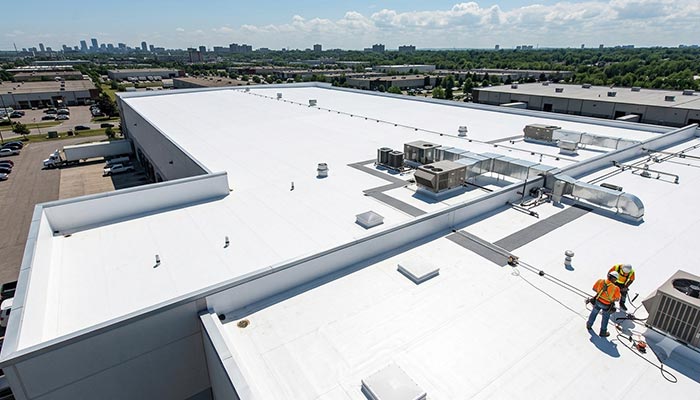
Houston’s climate presents a unique combination of challenges. Extreme heat, intense UV exposure, high humidity, and heavy seasonal storms all test a roofing membrane’s limits.
TPO’s white, reflective surface helps deflect solar heat, reducing roof surface temperatures significantly compared to darker materials. Meanwhile, PVC also reflects heat well, though its performance can vary based on membrane thickness and formulation.
Over time, however, UV exposure can affect membrane flexibility. Therefore, both materials require quality installation and periodic inspection to maintain long-term performance.
Humidity accelerates wear on lower-quality roofing systems. Both TPO and PVC resist moisture well when properly installed, thanks to heat-welded seams that eliminate weak points.
That said, ponding water remains a common concern on flat roofs. PVC’s chemical composition often provides an edge in areas where water may pool for extended periods.
Houston’s storm season brings sudden, heavy rainfall and occasional high winds. Consequently, seam strength and membrane flexibility become critical factors during storm events.
Both TPO and PVC systems, when installed correctly, withstand typical Houston storm conditions well. Still, proper drainage design plays an equally important role in overall roof performance.
Comparing TPO, EPDM, and PVC side by side helps clarify which system fits a given property. Below is a breakdown of how these materials generally compare.
Ultimately, no single system is universally superior. Instead, the right membrane depends on building use, rooftop equipment, and long-term maintenance planning.
Proper installation matters as much as material selection. A skilled TPO roofing contractor in Houston accounts for local building codes, drainage slopes, and wind uplift requirements specific to the Gulf Coast region.
Additionally, existing roof conditions influence whether a full commercial flat roof replacement in Houston is necessary or whether a recover system is possible. An experienced contractor evaluates the roof deck, insulation, and existing membrane before recommending a path forward.
Timing also matters. Scheduling installation during drier months, when possible, helps ensure proper seam welding and adhesive curing.
Recognizing early warning signs helps property owners avoid costly interior damage. Facility managers should watch for the following indicators.
If any of these signs appear, scheduling a professional TPO roof repair in Houston, TX sooner rather than later can prevent more extensive damage.
Roof accessory products play a bigger role in roof longevity than many property owners realize. Properly installed flashing, edge metal, drains, and pipe boots all protect against water intrusion at vulnerable points.
Meanwhile, routine maintenance extends the life of any single-ply roofing system. Consider the following practices.
Consistent maintenance, paired with quality accessory products, significantly reduces the likelihood of emergency repairs.
Not every roofing contractor understands the specific demands of the Gulf Coast climate. A Houston commercial roof maintenance company familiar with local weather patterns designs systems built to handle both extreme heat and sudden storms.
Furthermore, local code compliance varies by municipality. A contractor experienced across Houston, The Woodlands, Spring, and League City, TX understands the permitting and inspection requirements unique to each area.
As a result, working with an established commercial roofing contractor near me in Houston often means faster response times and more accurate assessments. Local experience translates directly into fewer installation errors and longer-lasting roofs.

Commercial TPO roof replacement in Houston: signs you need one + what to expect

Commercial TPO roofing in The Woodlands, TX: cost, lifespan & what to expect in 2026

How much does commercial TPO roofing cost in Houston? (2026 pricing guide)

TPO vs. PVC roofing in Houston: which commercial system wins in extreme heat & humidity?

Commercial roof coatings Houston: cost, savings & lifespan guide (2026)

Do Commercial Roofs in The Woodlands, TX Need Roof Accessories? A Guide for Property Managers

How much does commercial roof replacement cost in Houston, TX?
Both reflect heat effectively, though TPO is often preferred for general commercial use due to its cost efficiency. PVC may perform better where chemical exposure is also a concern. A professional assessment helps determine the best fit for your property.
With proper installation and regular maintenance, TPO roofing systems in Houston can last several decades. Lifespan depends on membrane thickness, installation quality, and how consistently the roof is inspected and maintained over time.
Yes, PVC roofing performs well during heavy rainfall thanks to heat-welded seams and strong water resistance. However, proper drainage design remains essential to prevent ponding water from affecting long-term membrane performance.
TPO and PVC are reflective, heat-welded membranes, while EPDM is a black, rubber-based membrane usually adhered with tape or adhesive. Each material offers different strengths depending on building type and climate demands.
Most commercial flat roofs benefit from inspections twice yearly, ideally before and after hurricane season. Additionally, inspections after major storms help catch damage early, reducing the risk of costly interior water damage.
Ponding water often results from poor drainage design, roof deck settling, or clogged drains. Addressing ponding early is important, since prolonged water exposure can weaken seams and shorten overall roof lifespan.
In some cases, yes. If the existing roof deck and insulation remain in good condition, a recover system may be appropriate. A professional evaluation determines whether recovery or full replacement better suits your building.
Absolutely. Flashing, drains, and edge metal protect vulnerable areas where leaks commonly begin. Poor-quality or improperly installed accessory products often lead to premature roof failure, regardless of the main membrane’s quality.
Yes, service coverage extends to surrounding communities, including The Woodlands, Spring, and League City, TX. Local familiarity with regional codes and weather patterns supports consistent, reliable commercial roofing outcomes.
Signs like widespread seam separation, persistent ponding, or interior water stains often indicate replacement is needed. Minor, isolated issues may only require repair. A professional inspection provides the clearest answer.
Choosing between TPO and PVC roofing in Houston ultimately depends on your building’s specific needs, exposure risks, and long-term maintenance goals. Both systems offer strong performance against extreme heat, humidity, and Gulf Coast storms when installed correctly.
Meanwhile, ongoing maintenance and quality roof accessory products play just as important a role as the membrane itself. Regular inspections help catch small issues before they become costly problems.
If you are weighing single-ply roofing systems for a property in Houston, The Woodlands, Spring, or League City, TX, Marlin Construction LLC can help evaluate your roof and recommend the right path forward. Reach out today to schedule a professional roof assessment and protect your investment for years to come.









10403 Kansack Lane
Houston, TX 77086
Call: (713) 444-5202
Hours of Operation
Monday – Saturday
7:00am – 6:00pm
Sunday – Closed
