
A Houston storm can leave your flat roof looking fine from the parking lot. However, hail and wind often cause damage you cannot see from the ground. That is why commercial roof repair in Houston starts with a close, careful inspection.
The clearest warning signs are cracked membrane, lifted seams, loose flashing, new ponding water, and fresh interior leaks. Even one of these can point to wider storm damage.
Marlin Construction LLC, a commercial roofing contractor in Houston, TX, created this guide for owners and facility managers. Inside, you will learn how storms affect commercial roofing in Houston TX. We also cover TPO roofing, roof coatings, and what damage means for your roof warranties.
Finally, you will see your maintenance & repair options. As a result, you can decide when to call a trusted Houston roofing company.
You can usually tell hail or wind damaged your commercial flat roof by checking a few key areas. Look for dents or cracks in the membrane, split seams, and bent edge metal. Also watch for new ponding water and interior leaks. A professional inspection then confirms any hidden damage.
Key signs to look for:
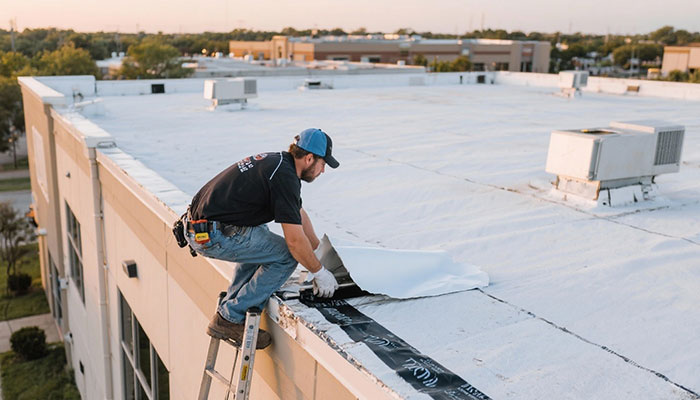
Houston roofs face stress all year, not just during big storms. Gulf Coast humidity, UV, and heat wear down materials long before hail arrives.
In spring, hail season brings sudden impacts across Harris County. Then hurricane season runs from June through November. During that stretch, high winds and sideways rain test every seam and edge.
Meanwhile, intense summer sun dries out membranes and coatings. Because of this, an aging roof often fails faster after a storm. A roof that held up last year may not survive the next squall line.
Hail damage looks different on each roof system. Knowing your material helps you spot problems sooner.
TPO roofing is a white, single-ply membrane common on Houston warehouses and retail centers. Hail can leave small star-shaped cracks or dents in the surface. Older TPO becomes brittle, so it cracks more easily on impact.
Also check the heat-welded seams. A hard strike near a seam can weaken the bond. Over time, water then slips underneath and soaks the insulation.
These asphalt-based systems often show granule loss after hail. Look for dark, bare spots where granules washed away. In addition, watch for soft bruises that feel spongy underfoot during an inspection.
Gravel-surfaced built-up roofs can hide damage well. For that reason, a trained eye should check the layers beneath.
Roof coatings protect the membrane below from UV and moisture. However, hail can chip, crack, or scuff the coating. Once that happens, the underlying roof loses its shield.
Small coating breaks may look minor. Still, they let sun and water reach the base layer faster.
Wind damage usually starts at the roof edges and corners. These areas face the strongest uplift during Gulf Coast storms.
Common wind damage signs include:
Next, look at rooftop units and parapet walls. Wind can shift HVAC curbs and crack sealant around them. As a result, water finds new paths into the building.
Sometimes the first clue appears inside, not on the roof. Indoor signs often mean water has already passed the membrane.
Watch for these interior warning signs:
If you see any of these, schedule commercial roof leak repair soon. Even a slow drip can damage inventory, equipment, and finishes.
Quick action limits damage and protects your claim. Follow these steps once the storm passes.
Above all, keep a simple log. Note dates, times, and who you spoke with at each step.
The right fix depends on how far the damage spreads. A thorough inspection, including moisture scans, guides the choice.
Targeted repair makes sense when:
A roof coating may work when:
Replacement is often the better path when:
In many cases, ongoing maintenance & repair prevents small storm damage from growing. Twice-yearly checks, plus post-storm visits, keep surprises to a minimum.
Storm damage can affect both your roof warranties and your insurance claim. Acting promptly protects each one.
Most manufacturer warranties require timely reporting and proper repairs. Unapproved patches, for example, may void coverage on TPO roofing systems. Therefore, use a contractor familiar with your manufacturer’s requirements.
In addition, keep these records together:
Insurance carriers often set deadlines for filing storm claims. Review your policy, and ask your agent or attorney about specific terms.
Each property type faces its own storm risks. Here is what to watch on common Houston buildings.
For warehouse roof repair in Houston, edge and seam checks deserve extra attention. Wide open roofs catch wind like a sail.
Marlin Construction LLC serves property owners throughout the Houston metro. Our crews know how local weather shifts from one side of town to the other.
We provide commercial roof repair in Houston, including North Houston and the 77086 area. We also serve Spring, The Woodlands, Cypress, and Katy to the north and west. To the south and east, we cover Sugar Land, League City, and Pasadena.
Coastal areas see more wind and salt air. Northern suburbs, by contrast, often take the brunt of spring hail. Either way, local insight helps us find damage faster.
The right contractor makes the storm recovery process smoother. Use these points to compare your options.
At Marlin Construction LLC, we focus on clear communication and quality workmanship.

7 Signs Your Houston Commercial Roof Needs a Coating (Not a Replacement)

TPO vs PVC vs silicone coating: Which flat roof costs less long-term in Houston?
Storm-damaged flat roof? Houston commercial roof repair guide for 2026–2027

How to choose a TPO roof coating contractor in Houston: 10 questions to ask before you sign

TPO roof replacement in Houston, TX: 2026 cost, process and warranty guide

TPO Roof Repair vs. Replacement: 7 Signs Your Houston Commercial Roof Needs Help

TPO Roofing Cost in The Woodlands, TX (2026): What Commercial Property Owners Actually Pay
Look for dents, cracks, or bruises in the membrane, plus granule loss on asphalt roofs. Check seams, flashing, and drains for new damage. Inside, watch for fresh stains or drips. Because hail damage often hides below the surface, a professional inspection with moisture scanning gives the clearest answer.
Wind damage usually shows up at edges and corners first. Common signs include lifted seams, bent edge metal, loose flashing, and debris punctures. You may also see membrane ripples or pulled fasteners. After any major Gulf Coast storm, schedule a roof check before small openings let water reach the insulation.
No, walking a storm-damaged roof is risky. Wet membranes are slippery, and weakened decking can fail without warning. Instead, inspect from the ground and check your interior ceilings. Then call trained commercial roofers in Houston. They use proper safety gear and know where hidden storm damage tends to appear.
Call within a day or two of the storm, even if you see no leaks or obvious damage yet. Early inspections catch hidden damage before rain spreads it. Prompt action also helps protect your roof warranties and insurance claim. During hail season and hurricane season, local crews book up fast, so reach out early.
Yes. Hail can crack or weaken TPO roofing without leaving obvious holes. Older membranes grow brittle from Houston UV and heat, so they fracture more easily. Impacts near heat-welded seams can also loosen the bond. Over time, water slips underneath, which is why a close inspection matters after every hailstorm.
They can, depending on who does the work. Many manufacturers require approved materials and methods for any repair. Unapproved patches may void coverage. Therefore, choose a Houston roofing company familiar with your system and its roof warranties. Keep every repair record and inspection report on file for future reference.
It depends on how widespread the damage is. Small punctures and seam issues often need only targeted repair. If the membrane is sound but weathered, roof coatings can add protection. However, widespread wet insulation or cracked membrane usually means replacement. A moisture scan helps decide the right path.
Most commercial roofs benefit from inspections twice a year, usually spring and fall. You should also add a check after every major storm. Regular maintenance & repair visits catch small problems early. As a result, your roof lasts longer and handles Gulf Coast humidity, UV, and heat with fewer surprise leaks.
Yes. Marlin Construction LLC handles commercial roofing in Houston TX, for many building types. These include warehouses, flex space, schools, churches, retail centers, office parks, and multifamily properties. We also serve HOA clubhouses and restaurants. Each inspection is tailored to the roof system and how the building is used.
Hail and wind damage rarely announce themselves right away. Instead, they show up as cracked membranes, lifted seams, and slow leaks weeks later. Catching them early protects your building, your tenants, and your roof warranties.
With hurricane season and hail season returning each year, now is the time to act. Regular maintenance & repair, smart use of roof coatings, and quick post-storm checks keep your TPO roofing performing longer.
If you need commercial roof repair in Houston, Marlin Construction LLC is ready to help. As a local Houston roofing company, we inspect, document, and explain every finding in plain language.
Schedule your storm damage roof inspection today. Call (713) 444-5202 or contact us to get started.












10403 Kansack Lane
Houston, TX 77086
Call: (713) 444-5202
Hours of Operation
Monday – Saturday
7:00am – 6:00pm
Sunday – Closed
