
A Houston contractor offering TPO roof coatings should hold manufacturer certification for the coating system they install. They should also carry general liability and workers’ compensation insurance. Strong contractors also offer industry training, such as NRCA ProCertification, the RCAT licensing program, and OSHA safety courses.
Why do these credentials matter so much? Texas has no statewide roofing license. As a result, almost anyone can call themselves a roofer. Credentials become your best filter.
TPO roof coatings can add years of service to an aging membrane. However, results depend on the installer. Roof coatings fail early when prep, product choice, or detail work falls short.
Houston’s heat, humidity, and storm seasons raise the stakes even further. This guide covers ten questions to ask before you sign. Use it to compare bids for TPO roofing, commercial roof coatings Houston projects, and ongoing roof maintenance repair.
Look for these credentials before you hire anyone for TPO roof coatings in Houston:
Because Texas does not license roofers at the state level, these voluntary credentials carry real weight.
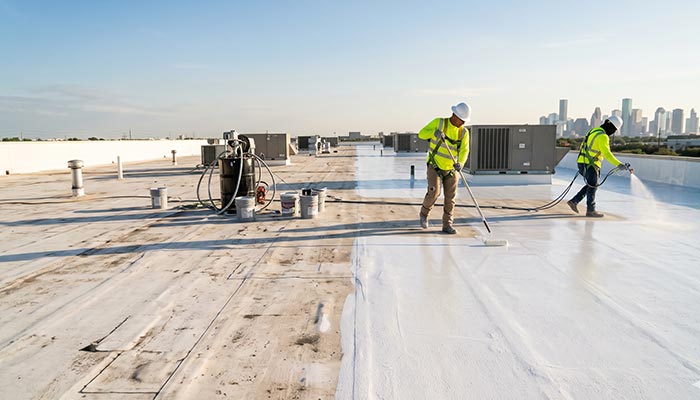
Houston roofs take a beating for most of the year. Intense Gulf Coast UV and heat break down TPO membranes over time. Meanwhile, constant humidity affects how coatings cure and bond.
Flat roofs add another challenge. Ponding water collects after heavy rain and stresses weak seams. Not every coating handles standing water well.
Then come the storms. Hurricane season brings wind-driven rain from June through November. Hail season can bruise membranes and split aging seams.
A skilled contractor plans for all of this. They choose products suited to local conditions and schedule work around the weather. They also follow the manufacturer’s application specs closely.
Local experience also matters. A crew that works across Harris County knows how afternoon storms and morning dew affect cure times. They know when to pause and when to push ahead.
That last point about specs protects your warranty. Manufacturers can deny coverage when installers skip prep steps or apply coatings too thin. In other words, poor workmanship can void protection you thought you had.
Bring these questions to every estimate meeting. Strong contractors answer them clearly and back their answers with documents.
The right choice depends on your roof’s condition, not just its age. A thorough inspection should guide the decision.
A coating usually makes sense when:
Replacement is often the better call when:
Here is how the two options compare:
What drives TPO roof coating cost per square foot in Houston? Several factors shape every quote:
Some owners also ask about a roof coating tax deduction under Section 179. Certain nonresidential roof improvements may qualify. Talk with a qualified tax professional about your situation.
TPO roof restoration in Houston does more than stop leaks. A bright, reflective coating keeps the roof surface cooler under summer sun. As a result, less heat moves into the building.
That benefit adds up on large flat roofs. For example, lower cooling costs on a warehouse roof can ease the load on aging HVAC units. Rooftop equipment may also run in cooler surroundings.
Restoration also helps you restore an aging TPO roof without a full tear-off. The existing membrane stays in place and keeps working. In turn, your building avoids the noise, dust, and downtime of replacement.
Flat roof coating in Houston, TX also seals small cracks and weathered seams. Consequently, the roof sheds water better during summer downpours and tropical storms.
Here is how different properties benefit:
Watch for these warning signs when you compare bids for commercial roof coatings in Houston:

7 Signs Your Houston Commercial Roof Needs a Coating (Not a Replacement)

TPO vs PVC vs silicone coating: Which flat roof costs less long-term in Houston?
Storm-damaged flat roof? Houston commercial roof repair guide for 2026–2027

How to choose a TPO roof coating contractor in Houston: 10 questions to ask before you sign

TPO roof replacement in Houston, TX: 2026 cost, process and warranty guide

TPO Roof Repair vs. Replacement: 7 Signs Your Houston Commercial Roof Needs Help

TPO Roofing Cost in The Woodlands, TX (2026): What Commercial Property Owners Actually Pay
A Houston roof coating contractor should hold manufacturer certification for the coating system used. Look for proof of general liability and workers’ compensation insurance. NRCA ProCertification, RCAT programs, and OSHA training add confidence when choosing roof coatings for commercial or residential roofs.
No. Texas has no statewide roofing license, so anyone can offer roofing work. That makes voluntary credentials important. Ask about the RCAT licensing program, manufacturer certification, and insurance. Some cities require permits, so confirm your contractor pulls the right ones for TPO roofing projects.
Yes. Coating over a TPO roof works well when the membrane is dry and firmly attached. The surface needs thorough cleaning and a primer matched to the coating. Seams and flashing must be repaired first. An infrared or moisture scan helps confirm the roof is a good fit for roof coatings before work begins.
Roof coating warranties often come in 10, 15 or 20-year terms. Length usually depends on coating thickness, product and roof condition. Manufacturer warranties cover materials, while workmanship warranties cover installation. Most require regular roof maintenance repairs, and inspections to stay valid.
It depends on roof condition. A coating suits a dry, sound membrane with limited leaks. Replacement fits roofs with widespread wet insulation or deck damage. For many Houston owners, commercial roof coatings extend roof life with less disruption. They also create less waste and shorter project timelines.
A coating can help, but repairs come first. Most TPO leaks start at seams, drains, curbs, and flashing. Your contractor should fix those details and reinforce weak areas before coating. Inspecting roof accessory products, such as pitch pans and vents, also helps prevent repeat leaks after the project.
Reflective roof coatings keep the roof surface cooler by bouncing back sunlight. As a result, less heat enters the building below. Warehouses, retail centers, and office parks with large flat roofs often notice the biggest comfort gains. Actual savings depend on insulation, HVAC equipment, and building use.
Quality roof coatings add a seamless layer that resists wind-driven rain and UV damage. However, no coating is storm-proof. Severe hail can still damage the roof below. Schedule inspections after hurricane and hail season so your contractor can catch problems early. Quick roof maintenance repair keeps small issues small.
Some nonresidential roof improvements may qualify under Section 179. However, rules depend on property type, use, and timing. A qualified tax professional can review your situation and advise you. Keep detailed invoices, photos, and scope documents from your commercial roof coatings project for your records.
Plan inspections at least twice a year, ideally in spring and fall. Also schedule a check after major storms. Regular roof maintenance repair keeps drains clear, catches seam issues early and helps keep coating warranties valid. Written reports also help facility managers track roof condition over time.
The right contractor protects your roof, your budget, and your warranty. Start with manufacturer certification and verified insurance. Then confirm industry training, local references, and a written scope.
Ask all ten questions before you sign anything. A trustworthy contractor will welcome them and answer with documents.
Marlin Construction LLC helps property owners across Houston make informed roof decisions. Our team handles TPO roof coatings, commercial roof coatings, TPO roofing repairs, roof accessory products, and roof maintenance repair.
Ready for a clear answer about your roof? Schedule a roof assessment with Marlin Construction LLC. We serve Houston, Spring, The Woodlands, Katy, Cypress, Sugar Land, League City, and Pasadena.







10403 Kansack Lane
Houston, TX 77086
Call: (713) 444-5202
Hours of Operation
Monday – Saturday
7:00am – 6:00pm
Sunday – Closed
