
The cost of TPO roof replacement in Houston depends on roof size, tear-off needs, membrane thickness, and insulation. Wind ratings also play a role. Because every building is different, no single per-square-foot figure fits all projects. Instead, an on-site inspection by a TPO roofing contractor in Houston gives the most accurate number.
Houston roofs take a beating. Summer heat, heavy humidity, and hurricane season stress flat roofs year after year. As a result, commercial roofing in Houston needs materials built for this climate.
That is why many owners choose TPO roof installation in Houston. The white membrane reflects sunlight and handles high winds when installed correctly. In addition, it suits warehouses, retail centers, offices, HOA buildings, and low-slope homes.
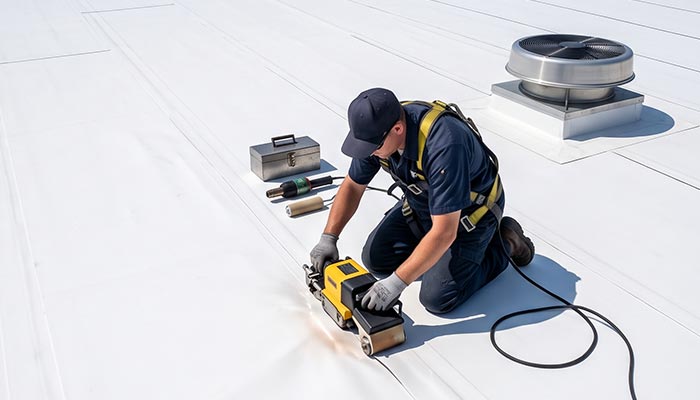
TPO, or thermoplastic polyolefin, is a single-ply roofing membrane. It comes in wide white sheets that crews heat-weld at the seams. For Houston buildings, it offers reflectivity, flexibility, and strong seams.
Cost per square foot for commercial TPO roof replacement in Houston depends on the roof’s condition, size and design. Material choices, attachment method, wind requirements, and warranty level also matter. Therefore, two buildings of the same size can have very different project scopes.
Larger roofs spread setup and staging across more square footage. However, the existing roof matters just as much. Removing several old layers takes more labor and disposal.
Deck condition is another key factor. Wet insulation or rusted metal decking must be repaired before new TPO goes down. Unfortunately, hidden damage often appears only during tear-off.
TPO commonly comes in 45-, 60-, and 80-mil thicknesses. Thicker membranes offer more puncture resistance. They also often qualify for longer warranties.
Insulation shapes the project too. Energy code rules, insulation type, and tapered drainage systems all affect scope.
Crews can install TPO in three main ways:
Houston’s storm exposure makes wind uplift ratings important. For example, FM-approved assemblies may require extra fasteners or specific systems.
Every penetration adds detail work. HVAC curbs, drains, parapet walls, skylights, and pipe boots all need careful flashing.
Next, consider site access. Building height, crane needs, and staging space affect labor.
Workmanship warranties cover installation. Manufacturer no-dollar-limit (NDL) warranties cover materials and labor for defects. However, NDL coverage requires stricter specifications and inspections.
Finally, Houston-area jurisdictions may require roofing permits.
For an accurate figure, schedule a free on-site estimate. Call Marlin Construction LLC at (713) 444-5202 to book a roof inspection.
A full tear-off removes the old roof down to the deck. A recover installs new TPO over one existing roof layer. The right choice depends on moisture levels, existing layers, deck condition, and local code limits.
A core cut and moisture scan show which option is safe. Never recover over wet materials, because trapped moisture shortens roof life.
Most commercial TPO roof replacement projects follow a clear sequence from inspection to completion. Actual timing depends on roof size, weather, and deck repairs. Smaller roofs may finish within days. Meanwhile, large facilities can take several weeks from tear-off to final walkthrough.
Moreover, Houston rain can shift schedules. Good crews dry in each section daily, so the building stays protected overnight.
During TPO roof installation in Houston, expect some noise, rooftop equipment and restricted areas near work zones. Most businesses stay open throughout the project. Clear communication and phased work keep disruption low for tenants, staff and customers.
Tear-off and fastening create noise during working hours. Fully adhered systems may produce mild adhesive odors.
Ask your contractor for a phased plan. Work can move section by section while operations continue below. In addition, daily updates help facility managers keep tenants and staff informed.
A flat roof usually needs replacement when damage is widespread rather than isolated. Repeated leaks, wet insulation, failing seams and aging membranes are strong signals. At that stage, repairs rarely hold. An inspection confirms whether repair or flat roof replacement in Houston is the smarter path.
Common warning signs include:
On the other hand, isolated issues often respond well to targeted repair. [Internal link: Roof maintenance and repair → /commercial/roof-maintenance-repair/]
Warranties and insurance protect your roofing investment. Manufacturer and workmanship warranties cover different risks, so review both carefully. After Houston storms, fast documentation and a professional inspection help support insurance claims for single-ply roof replacement.
Typically, only manufacturer-approved installers can offer NDL system warranties.
After a storm, photograph visible damage and call a roofer quickly. Then request a written inspection report to share with your insurer.
The right commercial TPO roofing contractor in Houston holds manufacturer credentials, carries proper insurance and has proven local experience. Ask for references, project photos, and written warranty details. Together, these checks reduce risk and help ensure a long-lasting roof.
Questions to ask before you sign:
Marlin Construction LLC, also known as Marlin Roof Systems, has served Houston property owners since 2004. The company has installed more than 5,000,000 square feet of TPO and PVC. It has also earned the Versico Gold Medal Quality Award for eight straight years.
The team serves Houston, The Woodlands, Spring, League City, and surrounding areas.

TPO roof replacement in Houston, TX: 2026 cost, process and warranty guide

TPO Roof Repair vs. Replacement: 7 Signs Your Houston Commercial Roof Needs Help

TPO Roofing Cost in The Woodlands, TX (2026): What Commercial Property Owners Actually Pay

TPO Seam Repair in Houston: Signs, Costs & Fixes After Storm Season (2026 Guide)

TPO Roof Maintenance in Houston: The 2026 Checklist for Commercial Property Owners

Repair or replace? When your Houston TPO roof needs more than a patch

TPO roof replacement in Houston: 2026 cost, timeline and what to expect
Cost per square foot depends on roof size, tear-off needs, membrane thickness, insulation, attachment method and wind ratings. Deck repairs, permits, and warranty level also shape the scope. Because every building differs, a TPO roofing contractor in Houston should inspect first. An on-site estimate gives the most accurate figure.
A well-installed TPO roof typically lasts 15 to 30 years in Houston. Lifespan depends on membrane thickness, installation quality, and roof drainage. In addition, regular inspections and prompt repairs extend service life. An experienced commercial TPO roofing contractor helps the roof hold up to heat and storms.
Smaller commercial roofs may take a few days, while large facilities can take several weeks. Timing depends on roof size, deck repairs, weather, and permits. For this reason, ask your TPO roofing contractor in Houston for a clear schedule. It helps you plan around tenants, staff, and daily operations.
Yes, TPO performs well in high winds when installed as a tested, code-approved assembly. Heat-welded seams also resist wind-driven rain. For TPO roofing in Houston, FM-approved systems add extra protection. Correct fastening patterns further improve wind uplift resistance during hurricane season and severe storms.
TPO balances reflectivity, seam strength and value for most Houston buildings. However, PVC offers stronger grease and chemical resistance, which suits restaurants. EPDM is durable but usually black, so it absorbs more heat. A commercial TPO roofing contractor can compare all three options for your specific roof.
Sometimes. A recover may work when only one dry roof layer exists, and the deck is sound. However, wet insulation or multiple layers usually require a full tear-off. A moisture survey during the inspection confirms which option is safe. It also shows which approach best suits your TPO roof installation in Houston.
Most projects include a contractor workmanship warranty and a manufacturer material warranty. In addition, approved installers may offer NDL system warranties that cover materials and labor. Ask your TPO roofing contractor in Houston to explain the terms, exclusions and inspection requirements in writing.
Insurance may cover storm-related damage, depending on your policy and the cause. Normal wear and age are usually excluded. First, document damage quickly with photos. Then request a professional inspection report. An experienced team in commercial roofing in Houston can support your claim with clear, documented findings.
Yes, most businesses stay open during a TPO roof replacement. Crews usually work in phases and dry in each section daily. Expect some noise, rooftop equipment, and restricted areas near work zones. Your commercial TPO roofing contractor should share a clear plan to protect staff, tenants, and customers throughout.
Look for manufacturer approval, proof of insurance, and strong local experience. Also ask for references, project photos, and written warranty details. The right TPO roofing contractor in Houston uses in-house crews and provides a detailed scope. Clear communication from start to finish is another strong sign of quality.
A TPO roof replacement in Houston protects your building from heat, rain, and storms for years.
Therefore, start with a professional inspection. Marlin Construction LLC brings over 20 years of commercial roofing in Houston and award-winning TPO roof installation experience.
Ready to plan your project? Call (713) 444-5202 or request a free roof inspection and estimate today.












10403 Kansack Lane
Houston, TX 77086
Call: (713) 444-5202
Hours of Operation
Monday – Saturday
7:00am – 6:00pm
Sunday – Closed
