
Commercial buildings in The Woodlands, TX face constant exposure to intense sun, heavy rainfall, hail, strong winds, and seasonal storms. These conditions gradually weaken roofing systems, even when visible damage is limited. Property owners who invest in a professional Roof Inspection in The Woodlands can identify hidden issues early, reduce the risk of unexpected leaks, and make informed maintenance decisions. Whether you manage an office building, retail center, industrial facility, HOA community, or residential property, a thorough inspection helps protect both your investment and daily operations.
Working with an experienced commercial roofing specialist is equally important. A qualified contractor understands how local weather affects different roofing systems, including TPO, modified bitumen, metal roofing, and other commercial roof assemblies. In addition, they evaluate drainage, flashing, rooftop equipment, and structural components to identify conditions that could shorten a roof’s service life. When inspections are completed consistently, building owners are better prepared to schedule maintenance, address minor concerns before they worsen, and extend the overall lifespan of the roofing system.
This guide explains why professional roof inspections play a critical role in protecting commercial properties throughout The Woodlands. You’ll learn when inspections should be scheduled, what experienced inspectors evaluate, common warning signs of roof damage, and how preventive maintenance supports long-term building performance. The article also explores how Commercial Roof Inspection The Woodlands, Commercial Roof Leak Inspection, Roof Accessory Products, TPO Repair in The Woodlands, and other specialized services help safeguard commercial roofing systems against Texas weather.
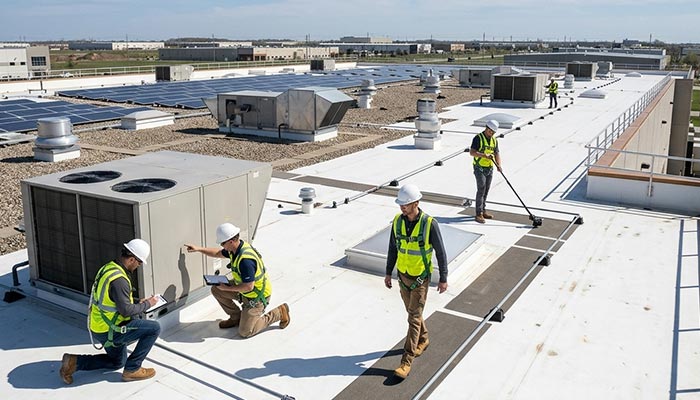
A commercial roof is one of the most valuable components of any building. Unlike many other building systems, it protects occupants, equipment, inventory, and structural elements from the environment every day.
Because commercial roofs often cover large surface areas, small defects can remain unnoticed for months. During that time, moisture may travel beneath the roof membrane, saturate insulation, weaken decking, and create expensive structural problems.
Routine inspections help identify developing issues before they interrupt business operations.
A comprehensive inspection can reveal:
Rather than waiting for a leak, proactive inspections provide valuable information that supports better maintenance planning.
Commercial buildings in The Woodlands experience environmental conditions that accelerate roof aging.
These include:
Each weather event places additional stress on roofing materials.
Over time, these conditions may cause:
Because these changes often occur gradually, they frequently remain hidden until water enters the building.
Regular Roof Inspection in The Woodlands TX helps identify these conditions before they become larger repair projects.
A commercial roof inspection is a detailed evaluation of a roofing system performed by an experienced roofing professional.
Unlike a quick visual walkthrough, a professional inspection examines both visible and hidden conditions affecting roof performance.
A complete inspection typically includes:
The inspection findings are usually documented in a comprehensive Roof Inspection Report, allowing property owners to prioritize maintenance based on actual roof conditions.
Featured snippet
A commercial roof inspection is a comprehensive evaluation of a roofing system’s condition, including membranes, flashing, drainage, rooftop equipment, penetrations, and structural components. The goal is to identify existing damage, potential risks, and maintenance needs before they develop into significant roofing problems.
Professional inspections provide value across many types of properties.
These include:
Although every building has unique roofing needs, regular inspections provide consistent benefits regardless of property size.
Facility managers also gain reliable documentation for future planning.
Many roofing problems begin long before interior leaks appear.
Recognizing early warning signs allows property owners to schedule inspections before damage spreads throughout the roofing system.
Common indicators include:
Water stains on ceilings or walls often indicate that moisture has already penetrated the roofing system.
Even small stains deserve immediate investigation.
Standing water that remains more than two days after rainfall may indicate drainage problems.
Persistent ponding accelerates membrane deterioration and increases structural loading.
Roof flashing protects vulnerable transitions around penetrations and edges.
Loose or deteriorated flashing frequently allows water to enter beneath the roofing system.
Commercial roof membranes may develop:
Early identification prevents moisture from reaching insulation layers.
Unexpected increases in cooling costs sometimes indicate moisture intrusion beneath the roof membrane.
Wet insulation loses much of its thermal performance.
Consequently, HVAC systems work harder throughout the year.
Texas storms can produce wind and hail capable of damaging commercial roofing materials.
Damage is not always obvious from ground level.
Professional inspections help identify hidden impacts before leaks develop.
Featured snippet
Early roof inspections identify developing roofing problems before they lead to interior leaks, structural deterioration, insulation damage, or business interruptions. Preventive inspections also support maintenance planning, extend roof lifespan, and help property owners make informed repair decisions after severe weather.
Commercial roofing problems affect much more than the roof itself.
Leaks may interrupt:
For property managers, even minor leaks can generate multiple maintenance requests.
Preventive inspections reduce these risks by identifying concerns before they disrupt business continuity.
Instead of reacting to emergencies, facility managers can schedule maintenance during convenient operating periods.
Routine inspections are only one part of an effective roofing strategy.
They work alongside Preventive Commercial Roof Maintenance to improve long-term roof performance.
Preventive maintenance typically includes:
When inspections and maintenance work together, roofs generally remain more reliable throughout their service life.
Rather than waiting for failures, building owners make informed maintenance decisions based on documented roof conditions.
Commercial roofs often include numerous rooftop accessories beyond the primary roofing membrane.
These components play an essential role in protecting the building envelope.
Common roof accessory products include:
Although these accessories are small compared to the overall roof area, they represent many of the most common leak locations.
Inspecting these components during every Commercial Roof Inspection The Woodlands helps prevent localized failures that could eventually affect the entire roofing system.
Most commercial roofs should undergo professional inspections at least twice each year. Additional inspections are recommended after severe storms, hail events, high winds, or heavy rainfall. Regular evaluations help identify developing issues before they affect building operations.
Yes. Water often travels beneath roofing materials before becoming visible indoors. A Commercial Roof Leak Inspection can detect hidden moisture, damaged seams, deteriorated flashing, and other conditions that may eventually lead to interior leaks.
No. A professional commercial roof inspection is significantly more detailed than a basic visual review. Experienced inspectors evaluate roofing materials, drainage systems, flashing, penetrations, rooftop equipment, roof accessory products, and overall roof performance while documenting findings for future maintenance planning.
A commercial roof should never be inspected only after a leak appears. By that stage, water may have already affected insulation, decking, or interior finishes.
Instead, inspections should become part of a proactive building maintenance program.
Most commercial properties in The Woodlands benefit from inspections:
Routine inspections establish a clear record of roof conditions over time. They also help facility managers prioritize maintenance based on actual findings rather than assumptions.
The climate in The Woodlands places unique demands on commercial roofing systems.
Throughout the year, roofs experience:
These environmental factors gradually weaken roofing materials.
Seasonal inspections allow roofing professionals to identify weather-related wear before it develops into significant damage.
This proactive approach supports both safety and long-term asset management.
Featured snippet
Commercial roofs should be professionally inspected at least twice each year and after major weather events. Routine inspections identify developing issues, verify roof performance, document storm-related damage, and help property owners schedule preventive maintenance before leaks or structural problems occur.
Storm damage is not always obvious from ground level.
Even when the roof appears intact, wind and hail may have compromised important roofing components.
Following severe weather, inspectors evaluate the roof for signs of:
A professional inspection provides valuable documentation that property owners can use when evaluating repair priorities.
Rather than relying on visible damage alone, inspectors examine the entire roofing system.
Water intrusion often begins in areas that are difficult to detect without experience.
During a Commercial Roof Leak Inspection, roofing professionals carefully inspect:
They also investigate signs of moisture migration beneath the roof membrane.
Locating the actual source of a leak is often more challenging than finding the location where water becomes visible inside the building.
For this reason, comprehensive inspections are essential after severe weather.
Featured snippet
A commercial roof leak inspection evaluates the entire roofing system to locate moisture entry points. Inspectors examine membranes, flashing, penetrations, drainage systems, rooftop equipment, and structural transitions while documenting conditions that may contribute to leaks or future roof failures.
Proper drainage is one of the most important factors affecting commercial roof performance.
When water drains efficiently, roofing materials remain drier and experience less long-term stress.
However, drainage problems allow water to remain on the roof for extended periods.
Over time, standing water may contribute to:
Professional roof inspections include a detailed evaluation of the drainage system.
Inspectors examine every part of the drainage network.
This often includes:
Even small obstructions can affect water movement across large commercial roofs.
Routine cleaning and inspection reduce the likelihood of water accumulation.
Standing water is among the most common concerns identified during commercial roof inspections.
Although some pooling immediately after rainfall is normal, water that remains long afterward often indicates underlying drainage issues.
Persistent ponding may lead to:
Addressing drainage concerns early helps preserve the overall roofing system.
Roof flashing is designed to prevent water from entering areas where roofing materials change direction or intersect with other building components.
These transitions represent some of the most common leak locations.
Flashing is commonly installed around:
Because flashing experiences continuous expansion and contraction, it requires regular inspection.
Experienced roofing professionals often discover:
Small flashing issues can quickly develop into significant water intrusion if left unaddressed.
Routine inspections identify these concerns before they affect interior building components.
Featured snippet
Roof flashing seals vulnerable transitions where water is most likely to enter a commercial roofing system. Regular flashing inspections help identify loose materials, deteriorated sealants, and weather-related damage before leaks compromise insulation, structural components, or interior spaces.
The roof membrane serves as the primary waterproof barrier protecting a commercial building.
As the membrane ages, exposure to sunlight, moisture, foot traffic, and weather gradually affects its condition.
During a professional inspection, roofing specialists evaluate:
Every membrane type ages differently.
Therefore, inspection methods vary depending on the roofing system installed.
Commercial buildings throughout The Woodlands often use roofing systems such as:
Each system offers different performance characteristics.
Professional inspectors understand how each material responds to local weather conditions.
This specialized knowledge helps property owners receive accurate maintenance recommendations.
TPO roofing has become one of the most widely installed commercial roofing systems because of its durability and energy performance.
However, like every roofing material, TPO requires routine inspection.
During a TPO roof inspection, professionals examine:
Even durable roofing systems benefit from ongoing preventive maintenance.
Many roofing issues cannot be accurately repaired until their root cause has been identified.
A professional inspection helps determine whether damage results from:
Only after this assessment should appropriate TPO Repair in The Woodlands be planned.
This systematic approach helps prevent recurring roofing problems.
Featured snippet
Yes. TPO roofing may develop hidden seam separation, punctures, flashing issues, or moisture intrusion without obvious interior symptoms. Professional inspections identify these conditions early, allowing building owners to address maintenance needs before they affect the roof’s overall performance.
Preventive maintenance is considerably more effective when based on inspection findings.
Instead of performing unnecessary work, maintenance teams can prioritize areas that genuinely require attention.
Inspection-driven maintenance commonly includes:
This targeted strategy helps maintain consistent roof performance throughout the year.
Every inspection should produce clear documentation.
Comprehensive reports provide valuable historical records that assist with future maintenance planning.
Inspection reports often include:
These reports help facility managers make informed decisions while maintaining organized building records.
Not every storm causes roof damage, but significant wind, hail, or heavy rainfall can create hidden issues. A professional inspection helps determine whether membranes, flashing, drainage systems, or rooftop equipment were affected before minor damage develops into larger roofing concerns.
Yes. Water that remains on a commercial roof for extended periods can accelerate membrane deterioration, increase structural stress, weaken insulation, and contribute to leaks. Routine roof inspections identify drainage concerns before standing water affects long-term roof performance.
Preventive Commercial Roof Maintenance helps identify developing roofing issues before they interrupt business operations. Combined with regular inspections, it supports longer roof life, better drainage performance, improved waterproofing, and more effective planning for future roof repair and maintenance.
A commercial roofing system consists of far more than its membrane. Every rooftop accessory creates a transition that must remain watertight despite constant exposure to weather and movement.
Although these components occupy a small portion of the roof, they account for many of the leaks discovered during a professional Roof Inspection in The Woodlands.
Routine inspections ensure these areas continue performing as intended.
Common Roof Accessory Products inspected include:
Even minor deterioration around these accessories can allow water to penetrate the roofing assembly.
Every penetration through a roof creates an opportunity for water intrusion.
Commercial buildings typically have numerous penetrations installed for:
During an inspection, roofing professionals verify that each penetration remains properly sealed and securely integrated with the roof membrane.
Loose sealants or damaged flashing around penetrations often become the starting point for leaks.
Roof accessory products are components installed on or through a roofing system, including roof hatches, pipe boots, walk pads, equipment curbs, vents, and safety equipment. Regular inspections ensure these accessories remain secure, watertight, and compatible with the surrounding roofing materials.
Most commercial buildings contain rooftop HVAC equipment.
While these units are essential, they also introduce multiple waterproofing challenges.
HVAC curbs should be inspected for:
Service technicians frequently access HVAC equipment.
Consequently, the surrounding roofing system experiences increased foot traffic and may become vulnerable to accidental membrane damage.
Professional inspections evaluate both the equipment supports and the adjacent roofing materials.
Maintenance personnel from various trades regularly access commercial roofs.
These include:
Although their work may not involve roofing, equipment servicing sometimes results in:
A comprehensive Commercial Roof Inspection The Woodlands helps identify these conditions before they create long-term problems.
Skylights improve natural lighting while reducing daytime energy demand.
However, they also introduce additional roof transitions.
Inspectors evaluate:
Leaks around skylights rarely originate from the glass itself.
Instead, surrounding flashing or deteriorated sealants are often responsible.
Early detection prevents water from affecting interior finishes.
Commercial buildings naturally expand and contract as temperatures change.
Expansion joints accommodate this movement.
When these joints deteriorate, they may allow water to penetrate beneath the roofing system.
Inspectors check for:
Because expansion joints experience continual movement, regular inspection remains essential.
Not all roof damage is visible.
Water frequently becomes trapped beneath roofing materials long before interior leaks develop.
Moisture surveys help identify these hidden conditions.
Depending on the roofing system, inspectors may use:
These methods provide valuable insight into the condition of insulation beneath the roof membrane.
Wet insulation loses much of its insulating capability.
Additionally, trapped moisture may contribute to:
Detecting moisture early allows maintenance teams to address localized issues before they spread throughout the roofing assembly.
Featured snippet
Moisture surveys detect water trapped beneath roofing materials before interior leaks appear. Using specialized equipment, inspectors identify hidden moisture, evaluate insulation conditions, and determine whether localized repairs or broader maintenance strategies are necessary to protect the roofing system.
Infrared technology has become an important tool for commercial roofing evaluations.
Rather than relying solely on visual observations, thermal imaging detects temperature differences that may indicate moisture beneath the roof surface.
Infrared inspections are particularly valuable for:
These inspections provide additional information without unnecessarily disturbing the roofing system.
Infrared evaluations help inspectors:
When combined with traditional inspection methods, thermal imaging creates a more complete understanding of roof conditions.
A professional inspection should always conclude with a detailed Roof Inspection Report.
This document provides far more than a simple checklist.
It becomes an essential maintenance resource for property owners and facility managers.
A comprehensive report commonly includes:
Detailed documentation allows future inspections to compare roof conditions over time.
Rather than relying on memory, facility managers can reference previous reports to identify recurring issues.
Historical documentation helps determine whether:
Consistent records also support long-term capital planning.
Featured snippet
A commercial roof inspection report should document roof condition, membrane performance, flashing, drainage, rooftop equipment, photographs, observed deficiencies, maintenance recommendations, and areas requiring continued monitoring. Detailed reports help property owners make informed maintenance decisions.
Following major storms, property owners often need accurate documentation of roof conditions.
Professional inspections provide objective observations that support this process.
Inspection documentation may include:
Although inspectors document observed conditions, they should avoid making unsupported conclusions regarding insurance coverage.
Instead, their role is to provide accurate technical findings.
Well-documented inspections help establish:
These records also demonstrate that routine maintenance has been taken seriously.
Every roofing system has an expected service life.
However, lifespan depends on many factors.
These include:
Routine inspections help maximize service life by identifying issues before they accelerate deterioration.
Rather than replacing roofing materials prematurely, property owners can make informed maintenance decisions based on documented conditions.
Several common mistakes reduce the effectiveness of roof maintenance programs.
Avoiding these issues helps protect both the building and the roofing investment.
Many owners postpone inspections until water enters the building.
Unfortunately, hidden damage often develops long before leaks become visible.
Small membrane punctures or loose flashing rarely remain minor.
Weather exposure typically allows these issues to worsen over time.
Mechanical systems, vents, skylights, and roof accessory products should always be included in inspections.
Ignoring these areas increases leak risks.
Wind and hail damage may not be immediately visible.
Prompt inspections improve the likelihood of identifying developing problems early.
Commercial roofing systems differ significantly from residential roofs.
Choosing professionals experienced in Commercial Roofing in The Woodlands helps ensure accurate evaluations and practical maintenance recommendations.
Featured snippet
Yes. Minor membrane damage, deteriorated flashing, blocked drains, or loose rooftop accessories can allow moisture to enter the roofing system. Early inspections identify these issues before they affect insulation, structural components, or daily business operations.
Roof accessories such as hatches, walk pads, equipment curbs, vents, and pipe boots are common leak locations. Inspecting these components during a Roof Inspection in The Woodlands helps identify deteriorated seals, damaged flashing, or loose connections before moisture enters the building envelope.
Infrared inspections do not directly see water, but they identify temperature variations that often indicate trapped moisture beneath roofing materials. Combined with visual inspections and moisture testing, infrared technology improves diagnostic accuracy for commercial roofing systems.
Yes. Rooftop HVAC equipment, equipment curbs, and service pathways are frequently associated with roof damage. Inspecting these areas helps identify flashing issues, membrane wear, sealant deterioration, and damage caused by maintenance activities or equipment vibration.
A detailed roof inspection report documents roof conditions, maintenance priorities, photographs, and observed deficiencies. These records support preventive maintenance, budgeting, insurance documentation, and long-term planning while helping facility managers monitor changes over multiple inspection cycles.
Selecting the right contractor is one of the most important decisions a property owner or facility manager can make. While many companies offer roofing services, commercial roofing requires specialized knowledge, equipment, and experience.
A qualified Commercial Roofing Contractor The Woodlands understands how commercial roofing systems perform under Texas weather conditions and develops inspection strategies based on each property’s unique needs.
Instead of focusing only on visible damage, experienced professionals evaluate the entire roofing system to identify existing concerns and potential risks.
When comparing contractors, consider whether they:
A knowledgeable contractor becomes a long-term maintenance partner rather than simply a repair provider.
Every region presents unique environmental challenges.
Commercial roofs in The Woodlands, Montgomery County, experience conditions that differ from many other parts of Texas.
These include:
Local roofing professionals understand how these conditions affect different roofing materials.
For example, prolonged UV exposure may accelerate membrane aging, while repeated storms can gradually weaken flashing and rooftop accessories.
A contractor familiar with local conditions can identify weather-related wear more accurately and recommend maintenance strategies that align with regional environmental demands.
Commercial roofing is an ongoing asset management responsibility rather than a one-time project.
Facility managers who schedule routine inspections gain a clearer understanding of roof performance over time.
A proactive maintenance strategy often includes:
This structured approach reduces uncertainty and supports more informed maintenance decisions.
Facility managers oversee multiple building systems simultaneously.
Because roofing issues can affect many other components, regular inspections simplify long-term planning.
Routine inspections help facility managers:
Inspection reports also provide historical records that simplify future evaluations.
Homeowners’ associations and commercial property management companies often oversee multiple buildings within one community.
Routine inspections provide consistent information about each roofing system.
Benefits include:
Rather than reacting to unexpected leaks, HOA boards can make maintenance decisions using reliable inspection findings.
Preventive maintenance helps preserve the integrity of the entire building envelope.
Every inspection contributes valuable information that supports future planning.
An effective maintenance program commonly includes:
This systematic approach reduces uncertainty while improving roof reliability.
Featured snippet
A commercial roof inspection should be completed by an experienced commercial roofing contractor familiar with the roofing system installed on the building. Qualified professionals evaluate membranes, flashing, drainage, rooftop equipment, penetrations, and overall roof performance while documenting findings for future maintenance planning.
Maintenance planning should never begin after a leak appears.
Instead, inspections provide the information needed to create an organized maintenance schedule.
A well-developed maintenance plan helps property owners:
This proactive approach supports informed decision-making throughout the roof’s service life.
Property owners often ask when an inspection becomes necessary.
Although every building is different, scheduling a professional inspection is recommended when:
Routine inspections also provide valuable peace of mind between major weather events.
Featured snippet
Property owners should schedule professional roof inspections at least twice each year, after significant storms, before major maintenance planning, during property transactions, or whenever signs of roof deterioration appear. Routine inspections help identify hidden issues before they interrupt building operations.
The best commercial roof inspection comes from an experienced contractor who understands commercial roofing systems, local weather conditions, preventive maintenance, and detailed roof evaluations. A thorough inspection should include membranes, flashing, drainage, rooftop equipment, and a comprehensive inspection report.
Yes. Moisture can become trapped beneath roofing materials while the roof surface appears normal. Professional inspections help identify hidden damage before interior leaks develop.
Inspection time varies depending on building size, roof design, accessibility, and the number of rooftop components. Larger commercial properties generally require more detailed evaluations.
Hail can damage roofing materials without creating immediate leaks. A post-storm inspection identifies hidden membrane damage, flashing displacement, and rooftop accessory impacts before they worsen.
Commercial TPO roof replacement in Houston: signs you need one + what to expect

Commercial TPO roofing in The Woodlands, TX: cost, lifespan & what to expect in 2026
How much does commercial TPO roofing cost in Houston? (2026 pricing guide)
TPO vs. PVC roofing in Houston: which commercial system wins in extreme heat & humidity?
Commercial roof coatings Houston: cost, savings & lifespan guide (2026)
Do Commercial Roofs in The Woodlands, TX Need Roof Accessories? A Guide for Property Managers
How much does commercial roof replacement cost in Houston, TX?
A professional Roof Inspection in The Woodlands helps identify hidden membrane damage, drainage concerns, flashing issues, and rooftop equipment problems before they become leaks. Regular inspections also support preventive maintenance, improve roof performance, and provide documentation that assists with long-term facility management.
Commercial buildings should generally receive professional inspections twice each year and after severe storms, hail, or high winds. Routine evaluations help detect developing problems early, support maintenance planning, and reduce the risk of unexpected roofing issues affecting daily business operations.
A Commercial Roof Inspection The Woodlands typically includes evaluating roof membranes, flashing, drains, skylights, HVAC curbs, roof penetrations, rooftop equipment, seams, and Roof Accessory Products. Inspectors also document findings with photographs and maintenance recommendations for future planning.
Yes. A Commercial Roof Leak Inspection looks beyond visible leaks by evaluating membranes, flashing, roof penetrations, drainage systems, and moisture-prone areas. When needed, inspectors may use specialized diagnostic tools to identify hidden moisture before it causes interior damage or structural concerns.
Roof hatches, pipe boots, walk pads, vents, equipment curbs, and other Roof Accessory Products create vulnerable roof transitions. Inspecting these components helps identify deteriorated seals, damaged flashing, or loose connections before water reaches the underlying roofing system or building interior.
Yes. Professional TPO Repair in The Woodlands should begin with a comprehensive inspection to determine the underlying cause of damage. Evaluating seams, flashing, drainage, rooftop equipment, and membrane condition helps ensure repairs address the actual problem rather than only visible symptoms.
Routine inspections provide facility managers with detailed roof condition reports, maintenance priorities, photographs, and documented observations. These records improve planning, simplify budgeting, support insurance documentation, and help track roof performance across multiple inspection cycles.
Preventive Commercial Roof Maintenance helps preserve roofing systems by identifying developing issues before they interrupt business operations. Combined with routine inspections, proactive maintenance supports roof longevity, improves drainage performance, protects rooftop components, and reduces the likelihood of emergency repairs.
An experienced Commercial Roofing Contractor The Woodlands, understands local weather conditions, commercial roofing materials, inspection procedures, and preventive maintenance strategies. Their expertise helps property owners receive accurate assessments, practical recommendations, and reliable documentation for informed roofing decisions.
Yes. Although commercial properties often require more complex evaluations, homeowners also benefit from Roof Inspection in The Woodlands. Professional inspections identify weather-related damage, drainage issues, flashing deterioration, and early signs of wear, helping protect the home’s roofing system and overall structural integrity.
Protecting a commercial property begins with understanding the condition of its roofing system. Regular Roof Inspection in The Woodlands provides valuable insight into roof performance, identifies developing concerns early, and supports informed maintenance planning.
From evaluating drainage systems and roof membranes to inspecting flashing, rooftop equipment, and Roof Accessory Products, comprehensive inspections help preserve the integrity of the entire building envelope. They also support Preventive Commercial Roof Maintenance, improve documentation, and reduce the likelihood of unexpected disruptions.
Whether your property includes TPO roofing, metal roofing, or another commercial roofing system, routine inspections remain one of the most effective ways to extend service life and improve long-term reliability. When inspections identify concerns early, Roof Repair in The Woodlands and TPO Repair in The Woodlands can be planned before small issues become larger maintenance challenges.
If you manage an office building, retail center, industrial facility, HOA community, or residential property, partnering with an experienced The Woodlands Commercial Roofer is an important step toward protecting your investment. Marlin Construction LLC provides professional Commercial Roofing in The Woodlands, delivering detailed inspections, practical maintenance recommendations, and thorough roof evaluations tailored to the demands of Texas commercial properties.
Contact Marlin Construction LLC to schedule a professional roof inspection and gain the information needed to make confident decisions about your roofing system. Call 713-444-5202 today!




10403 Kansack Lane
Houston, TX 77086
Call: (713) 444-5202
Hours of Operation
Monday – Saturday
7:00am – 6:00pm
Sunday – Closed
