
Commercial buildings depend on durable roofing systems to protect operations, equipment, tenants, and valuable assets. When leaks develop, however, delaying repairs can quickly lead to water intrusion, damaged insulation, mold growth, and costly disruptions. If you are searching for reliable TPO Repair in South Houston, choosing an experienced commercial roofing professional is one of the most important decisions you can make.
Whether you manage a warehouse, office building, retail center, industrial facility, HOA property, or flat-roofed home, prompt repairs help preserve your roofing system and minimize downtime. An experienced Roofing Contractor in Houston understands how local weather, heavy rainfall, strong winds, and intense sunlight affect commercial roofing in Houston TX. Likewise, trusted Commercial Roofing Contractors Houston recognize that TPO roofing in Houston requires specialized repair methods to maintain long-term performance.
This guide explains how TPO roofing systems work, why leaks develop, what warning signs demand immediate attention, and how professional repairs help protect your investment.
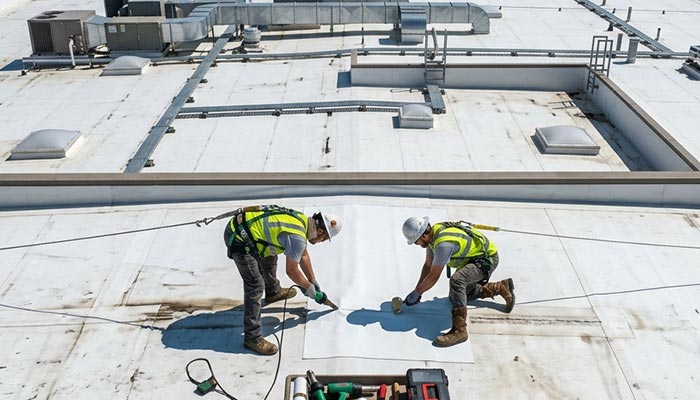
Emergency roof leaks rarely improve without professional attention. Instead, small membrane damage often expands as water travels beneath the roofing system.
A prompt repair can help:
For commercial buildings, every hour of uncontrolled water intrusion increases the risk of additional repairs beyond the roof itself.
The best commercial roofing contractor provides more than emergency leak repairs. They perform detailed inspections, accurately identify the source of moisture, repair the damaged membrane using manufacturer-approved methods, and recommend preventive maintenance to reduce future problems.
Marlin Construction LLC focuses on commercial roofing systems, including Commercial TPO Roof Repair in South Houston projects. Their approach emphasizes thorough inspections, professional workmanship, and long-term roof performance rather than temporary fixes.
Thermoplastic Polyolefin (TPO) is a single-ply roofing membrane widely used on commercial flat and low-slope buildings. It combines durability, flexibility, and energy efficiency, making it one of today’s most popular commercial roofing materials.
Unlike traditional built-up roofing systems, TPO consists of a single membrane that is mechanically fastened, fully adhered, or ballasted over insulation and roof decking.
Its reflective surface also helps reduce heat absorption, making it suitable for buildings exposed to prolonged sunlight.
Commercial property owners often select TPO roofing because it offers a combination of performance and long-term value.
Benefits include:
These characteristics make TPO an excellent solution for warehouses, retail centers, schools, medical facilities, office buildings, manufacturing plants, and apartment complexes.
The TPO membrane serves as the primary waterproof barrier protecting the building.
Its flexible construction allows it to expand and contract during changing temperatures without excessive stress.
When installed correctly, the membrane forms a continuous waterproof surface across the roof.
Professional Commercial Roofing Contractor South Houston teams inspect this membrane carefully because even small punctures may eventually allow moisture beneath the system.
One of the biggest advantages of TPO roofing is its heat-welded seams.
Rather than relying solely on adhesives, installers use specialized hot-air welding equipment to fuse membrane sheets together.
Properly welded seams become extremely strong and create a continuous waterproof connection.
However, improper installation, aging, storm damage, or movement can eventually weaken these seams.
As a result, seam inspections remain one of the most important parts of TPO Roofing Maintenance and Repair in South Houston.
Many commercial property owners appreciate TPO because its reflective surface helps reduce rooftop heat absorption.
A cooler roof can improve indoor comfort while reducing thermal stress on roofing materials.
Lower rooftop temperatures may also reduce expansion and contraction cycles that gradually affect roofing components.
Consequently, a properly maintained TPO system contributes to better long-term building performance.
South Houston experiences weather conditions that challenge every commercial roofing system.
These include:
Because of these environmental conditions, routine inspections become essential.
Even durable roofing systems require maintenance to remain watertight year after year.
Understanding why leaks occur helps building owners identify problems before they become emergencies.
Although TPO roofing performs exceptionally well, no roofing system is immune to damage.
Below are the most common reasons commercial roofs develop leaks.
Severe storms frequently create sudden roofing problems.
Flying debris, hail, and strong winds may puncture the membrane or loosen flashing around rooftop penetrations.
Even if the damage appears minor, water may already be entering beneath the membrane.
Professional inspections following major storms often identify issues before interior leaks develop.
Strong winds place tremendous pressure on commercial roofing systems.
Over time, repeated wind events may loosen membrane edges or stress attachment points.
Eventually, sections of the roofing system may lift slightly, allowing rainwater underneath.
Wind uplift damage should always receive immediate attention to prevent larger failures.
Heat-welded seams provide outstanding waterproof protection.
Nevertheless, poor installation, aging materials, roof movement, or storm stress can weaken welded joints.
Once seams begin separating, water easily enters beneath the membrane.
Routine inspections significantly reduce this risk by identifying weakened seams early.
Commercial roofs support numerous maintenance activities.
Technicians servicing HVAC systems, satellite equipment, solar installations, or communication devices may accidentally puncture the membrane.
Common causes include:
Even a small puncture deserves prompt repair before moisture spreads beneath the insulation.
Mechanical equipment often sits directly on commercial roofs.
During servicing, workers may unintentionally damage surrounding roofing materials.
Leaks frequently develop around:
These areas require careful inspections during every maintenance visit.
Flashing protects roof transitions and penetrations.
It seals areas surrounding:
As flashing ages, it may crack, separate, or loosen.
Water naturally follows these openings into the roofing assembly.
Fortunately, professional repairs usually restore waterproof performance before widespread damage occurs.
Flat roofs rarely remain perfectly level throughout their lifespan.
Minor settling may create low areas where water collects after rainfall.
Standing water increases stress on roofing materials while exposing seams to prolonged moisture.
Eventually, this may accelerate membrane deterioration.
Proper drainage improvements often reduce future problems.
Every penetration interrupts the roofing membrane.
Examples include:
Each penetration creates another location requiring waterproof detailing.
Professional installers carefully inspect these areas because many commercial leaks originate here.
Although TPO roofing systems are durable, all materials naturally age.
Years of sunlight, weather exposure, thermal movement, and environmental conditions gradually affect roofing performance.
An aging membrane becomes more susceptible to:
Regular maintenance extends the useful life of older roofing systems.
Many roof failures begin during installation rather than years later.
Examples include:
Working with experienced Commercial Roofing Contractors in Houston helps reduce the likelihood of these avoidable issues.
Commercial roof leaks rarely appear without warning.
Recognizing early indicators allows property owners to schedule repairs before significant damage develops.
Below are the most common warning signs that demand immediate attention.
Water dripping from ceilings is often the most obvious sign of roof failure.
However, moisture may travel considerable distances before becoming visible indoors.
Therefore, the leak location inside the building may not directly match the damaged area above.
Professional leak detection helps locate the true source.
Brown or yellow ceiling stains often indicate hidden moisture.
Although staining may appear minor initially, it usually signals ongoing water intrusion.
Prompt inspections help determine whether the leak originates from roofing materials, flashing, or rooftop equipment.
Insulation loses much of its effectiveness once saturated.
Wet insulation can also:
Professional moisture assessments determine whether insulation requires replacement.
Visible tears should never be ignored.
Even small openings allow rainwater beneath the roofing system.
Once moisture becomes trapped below the membrane, repairs often become more extensive.
Emergency Commercial Roof Repair South Houston services help prevent additional deterioration.
Loose flashing frequently develops around rooftop penetrations and perimeter edges.
Because flashing protects vulnerable transitions, even small separations deserve immediate repair.
Otherwise, water may infiltrate areas that remain hidden for weeks or months.
Separated seams often indicate developing waterproof failures.
During inspections, roofing professionals examine welded joints carefully for signs of deterioration.
Repairing seams early typically prevents much larger repairs later.
Persistent moisture encourages mold growth inside insulation, ceilings, and wall cavities.
Musty odors often appear before visible mold becomes noticeable.
Ignoring these warning signs may allow indoor air quality problems to worsen over time.
Long-term water intrusion eventually affects structural components.
Steel may corrode.
Wood decking may weaken.
Fasteners may loosen.
Insulation may deteriorate.
These issues demonstrate why early intervention remains far more effective than waiting until damage becomes extensive.
Once a leak develops, every rainfall increases the likelihood of additional damage. Although a small puncture or separated seam may appear minor, water can travel beneath the membrane and affect areas far from the original entry point.
Immediate action helps preserve the roofing system while protecting the building’s structure and daily operations.
Water intrusion quickly affects ceilings, drywall, flooring, lighting systems, and interior finishes.
For commercial properties, even a small leak can disrupt offices, retail areas, production spaces, or common areas. Prompt repairs reduce the spread of moisture and help keep the building operational.
Commercial TPO roofs rely on dry insulation to maintain thermal performance.
Once insulation becomes saturated, it loses effectiveness and may retain moisture long after the surface appears dry.
Wet insulation can also:
Professional moisture testing determines whether insulation can remain or should be replaced during repairs.
Warehouses, manufacturing facilities, medical buildings, and retail centers often contain valuable equipment and inventory directly beneath the roof.
Water intrusion may damage:
Fast emergency repairs reduce these risks before moisture spreads throughout the building.
Apartment communities, shopping centers, office buildings, and mixed-use developments depend on reliable roofing systems.
Leaks may lead to:
Addressing roof leaks promptly helps minimize disruption for tenants and visitors.
Water and electrical systems should never mix.
Roof leaks sometimes reach:
Professional inspections help identify moisture before it creates additional safety concerns.
South Houston’s humid climate allows mold to develop quickly when moisture remains trapped inside roofing materials or building assemblies.
Mold may affect:
Removing the source of water is the first step toward preventing long-term moisture problems.
Emergency repairs do more than stop leaks.
They also help preserve:
Routine repairs often extend the useful service life of a commercial roofing system while delaying larger restoration projects.
Successful Commercial TPO Roof Repair in South Houston requires more than sealing a visible leak.
Experienced roofing professionals follow a structured repair process designed to identify both obvious and hidden damage.
Every repair begins with a detailed inspection.
The roofing team evaluates:
The objective is to identify every condition contributing to water intrusion.
Water rarely enters directly above the visible interior leak.
Instead, moisture often travels beneath insulation before reaching occupied spaces.
Roofing specialists use several methods to locate the actual source, including:
Accurate leak detection prevents unnecessary repairs while resolving the underlying problem.
Water hidden beneath the membrane may affect insulation and roof decking.
A professional moisture assessment helps determine:
This step ensures repairs address the complete issue rather than only surface symptoms.
Proper preparation is essential before any repair begins.
Roof technicians clean the damaged area to remove:
A clean repair surface improves adhesion and welding performance.
One defining feature of TPO roofing is its heat-welded seams.
Using specialized hot-air welding equipment, technicians fuse compatible membrane materials together.
Proper heat welding creates strong, waterproof joints that integrate with the existing roofing system.
Experienced Commercial Roofing Contractor South Houston professionals follow manufacturer-approved procedures throughout this process.
If the membrane has punctures or tears, technicians install compatible TPO patches.
Each repair patch is:
Quality installation restores waterproof integrity without compromising surrounding materials.
Many commercial leaks develop around flashing rather than open roof surfaces.
During repairs, technicians inspect and restore flashing around:
Well-installed flashing remains essential for long-term waterproofing.
Standing water accelerates roof deterioration.
If drainage problems contribute to recurring leaks, roofing professionals may recommend improvements such as:
Better drainage helps reduce future membrane stress.
Before completing the project, the repair area undergoes a final inspection.
The roofing team verifies:
This final review confirms the repair meets professional standards.
Commercial roofing differs significantly from residential roofing.
Flat roofing systems require specialized knowledge, equipment, and repair techniques that protect both the building and the roofing manufacturer’s recommendations.
Working with an experienced Commercial Roofing Contractor in South Houston helps ensure repairs are completed correctly.
Large commercial buildings often include numerous rooftop components.
These may include:
Each component creates additional waterproofing challenges that require specialized attention.
Commercial roofing projects involve elevated work areas, specialized equipment, and active business environments.
Professional roofing teams follow established safety procedures throughout every repair.
These practices help protect:
Safe work practices also help reduce project interruptions.
Commercial roofing repairs should comply with applicable building codes and local regulations.
Professional contractors understand requirements involving:
Following proper installation standards helps maintain roofing performance over time.
Commercial roofing contractors operate within established workplace safety regulations.
OSHA-compliant practices help manage risks associated with:
These procedures contribute to safer project execution.
Different roofing manufacturers publish detailed repair recommendations for their TPO systems.
Experienced roofing professionals follow these guidelines when performing repairs.
Proper repair methods help maintain compatibility between existing roofing materials and newly installed components.
Commercial roof warranties often require repairs that follow approved installation practices.
Improper repairs may affect future warranty coverage.
Professional contractors understand how to complete repairs while respecting manufacturer requirements whenever applicable.
Flat roofing systems protect a wide variety of commercial buildings throughout South Houston.
Although every property has unique requirements, prompt repairs help reduce operational disruptions across many industries.
Warehouse roofs protect inventory, logistics operations, and equipment.
Leaks may interrupt shipping schedules while exposing stored products to water damage.
Routine inspections help identify membrane issues before they expand.
Industrial buildings often contain sensitive manufacturing equipment and electrical infrastructure.
Roof leaks may interrupt production while creating unsafe working conditions.
Professional repairs help maintain operational continuity.
Office properties depend on dry, comfortable work environments.
Roof leaks may affect:
Timely repairs minimize workplace disruption.
Retail businesses rely on uninterrupted customer access.
Water intrusion may damage merchandise while creating slip hazards for customers and employees.
Preventive maintenance supports reliable building performance.
Multi-family buildings require dependable roofing systems that protect numerous residents simultaneously.
Routine roof inspections help property managers address minor issues before they affect multiple units.
Educational facilities require safe indoor environments throughout the academic year.
Roof leaks may affect classrooms, libraries, cafeterias, and administrative offices.
Early repairs help reduce interruptions to daily operations.
Places of worship and community facilities often feature large roof areas with multiple penetrations.
Regular maintenance helps preserve these buildings while protecting gathering spaces from water intrusion.
Healthcare buildings depend on uninterrupted operations.
Roof leaks may affect patient care areas, specialized equipment, and critical infrastructure.
Prompt Commercial Flat Roof Repair in South Houston helps maintain safe healthcare environments.
Regardless of building type, early roof repairs help:
Small repairs performed promptly often prevent larger roofing issues later.
Emergency repairs resolve immediate leaks, but preventive maintenance helps reduce future roofing problems. A proactive maintenance program keeps a commercial roofing system performing as designed while extending its service life.
Routine inspections also help identify small issues before they become expensive disruptions.
Every commercial roof experiences constant exposure to sunlight, rain, wind, humidity, and temperature changes.
Over time, these conditions affect:
Regular maintenance helps address these conditions before water enters the building.
Professional roof inspections should be part of every facility maintenance plan.
Inspections are especially valuable:
A detailed inspection provides valuable information about the current condition of the roofing system.
Heat-welded seams are among the strongest features of a TPO roof.
However, years of movement and weather exposure may gradually affect welded joints.
During maintenance visits, roofing professionals inspect seams for:
Early seam repairs help maintain a continuous waterproof barrier.
Flashing protects roof transitions where leaks commonly begin.
Routine inspections include:
Maintaining these components reduces the likelihood of future leaks.
Commercial roofs rely on effective drainage.
Leaves, debris, roofing materials, and dirt may clog:
Blocked drainage encourages ponding water, which increases stress on the roofing membrane.
Keeping drainage systems clear improves long-term roof performance.
Loose debris may damage roofing materials while restricting drainage.
Maintenance crews remove:
A clean roof allows inspectors to identify developing problems more easily.
Not every roofing issue requires major restoration.
Minor repairs performed during routine maintenance often include:
Preventive maintenance helps preserve Commercial TPO Roof Repair South Houston investments for years.
Commercial roofing decisions affect both building performance and long-term capital planning.
Professional Roof Consulting Services provide building owners with objective information that supports informed decisions throughout the roof’s lifecycle.
A detailed roof assessment evaluates the overall condition of the roofing system.
The inspection typically reviews:
This information helps owners understand current roofing needs.
Commercial roofs represent significant building assets.
Planning allows facility managers to prioritize maintenance and schedule future improvements.
Rather than reacting to emergencies, owners can make informed maintenance decisions based on documented roof conditions.
Every commercial roof has its own maintenance history.
Professional documentation helps track:
Asset management supports better long-term planning across multiple properties.
A customized maintenance schedule helps reduce unexpected roofing failures.
Preventive plans often include:
Consistent maintenance helps preserve roof performance throughout its service life.
Eventually, every roofing system reaches the point where restoration or replacement becomes more practical than ongoing repairs.
Roof consultants help owners evaluate:
These evaluations support responsible facility management.
A commercial roofing system consists of much more than the visible membrane.
Roof Accessory Products play a critical role in waterproofing, safety, drainage, and long-term durability.
Proper installation and maintenance of these components help protect the entire roofing assembly.
Pipe boots create watertight seals around plumbing and mechanical penetrations.
Damaged pipe boots frequently become sources of roof leaks if left unaddressed.
Roof hatches provide safe access for maintenance personnel.
Proper flashing around roof hatches prevents water intrusion while supporting safe rooftop access.
Skylights improve natural lighting but require careful waterproof detailing.
Routine inspections ensure flashing and the surrounding membrane remain watertight.
Maintenance personnel frequently access rooftop equipment.
Walk pads protect the TPO membrane from repeated foot traffic while reducing unnecessary wear.
Coping protects parapet walls from water infiltration.
Well-maintained coping systems help secure roof edges while improving weather resistance.
Flashing remains one of the most important waterproofing components on any commercial roof.
Properly installed flashing protects:
Routine inspections help maintain long-term performance.
Roof vents support proper building ventilation while protecting interior spaces from moisture.
Professional installation helps ensure each vent remains fully integrated with the roofing membrane.
Roof edges experience significant wind exposure.
Secure edge metal helps stabilize the roofing system while directing water toward drainage components.
Effective drainage protects every commercial roofing system.
Properly functioning drains reduce standing water while minimizing membrane stress after heavy rainfall.
Routine maintenance keeps drainage systems operating efficiently throughout the year.
Choosing a commercial roofing contractor involves more than selecting someone to repair a leak.
Property owners benefit from working with professionals who understand commercial roofing systems, building performance, and long-term maintenance strategies.
Marlin Construction LLC focuses on commercial roofing solutions designed to protect buildings throughout South Houston.
Their approach emphasizes thorough inspections, careful planning, and quality workmanship tailored to each property’s needs.
Commercial roofing systems require specialized knowledge that differs from residential roofing.
Marlin Construction LLC works with commercial roofing assemblies, including TPO roofing systems commonly installed on warehouses, office buildings, retail centers, industrial facilities, apartment communities, and other low-slope properties.
TPO roofing requires manufacturer-approved repair techniques and proper heat-welded installation methods.
Understanding membrane behavior, flashing details, drainage systems, and roof penetrations helps produce repairs that support long-term performance.
Every successful repair begins with a thorough inspection.
Rather than focusing only on visible leaks, comprehensive evaluations identify contributing conditions that may affect other areas of the roof.
This process supports more accurate repair recommendations.
Quality workmanship remains essential for every commercial roofing project.
Attention to detail during inspections, membrane preparation, seam welding, flashing repairs, and final quality reviews contributes to dependable roofing performance.
Commercial roofing requires safe work practices.
Professional crews follow established safety procedures while working around occupied buildings, rooftop equipment, and elevated work areas.
Safety protects both workers and property throughout every project.
Emergency repairs solve immediate concerns.
However, preventive maintenance helps reduce future disruptions.
Marlin Construction LLC encourages ongoing inspections and maintenance programs that support long-term roof reliability.
Commercial property owners benefit from repair strategies that consider future roof performance.
Rather than focusing solely on today’s leak, long-term planning helps maximize the value of existing roofing assets.
Commercial TPO roof replacement in Houston: signs you need one + what to expect

Commercial TPO roofing in The Woodlands, TX: cost, lifespan & what to expect in 2026
How much does commercial TPO roofing cost in Houston? (2026 pricing guide)
TPO vs. PVC roofing in Houston: which commercial system wins in extreme heat & humidity?
Commercial roof coatings Houston: cost, savings & lifespan guide (2026)
Do Commercial Roofs in The Woodlands, TX Need Roof Accessories? A Guide for Property Managers
How much does commercial roof replacement cost in Houston, TX?
The repair timeline depends on the leak location, weather conditions, and the extent of membrane damage. Most emergency repairs begin with a detailed inspection and leak detection. A qualified Roofing Contractor in Houston focuses on stopping water intrusion while ensuring repairs support long-term roof performance.
Safety and weather conditions determine when repairs can begin. Temporary measures may help reduce water intrusion until conditions improve. Once the roof is safe to access, Commercial Roofing Contractors Houston can complete permanent TPO repairs using manufacturer-recommended methods.
Heat-welded seams may weaken because of aging, storm damage, poor installation, roof movement, or prolonged weather exposure. Routine TPO Roofing Maintenance and Repair South Houston inspections identify seam issues early, helping prevent water intrusion and more extensive membrane damage.
Most commercial roofing professionals recommend inspections at least twice each year and after severe storms. Regular evaluations identify drainage issues, flashing damage, membrane wear, and developing leaks before they become costly repairs for commercial roofing in Houston, TX.
Yes. Small punctures and localized membrane damage can often be repaired using compatible TPO patches and professional heat-welding techniques. The repair must include proper surface preparation and a careful inspection to ensure the surrounding roofing system remains watertight.
TPO roofing performs well on warehouses, retail centers, office buildings, schools, apartment complexes, industrial facilities, churches, and many other low-slope structures. Its durability and energy efficiency make it a popular choice for commercial properties throughout South Houston.
Replacement may be appropriate when widespread membrane deterioration, recurring leaks, saturated insulation, or significant structural issues affect the roofing system. A professional roof inspection helps determine whether repair or replacement is the better long-term solution.
After a storm, safely inspect the property from the ground and document any visible damage. Avoid walking on the roof unless it is safe to do so. Schedule a professional Commercial TPO Roof Repair South Houston inspection to identify hidden damage before leaks worsen.
Roof Consulting Services provides independent evaluations that help owners understand roof condition, maintenance priorities, and future planning. Professional assessments support better asset management, preventive maintenance scheduling, and informed decisions about repairs or long-term roofing strategies.
Components such as flashings, pipe boots, roof hatches, walk pads, edge metal, drains, and vents work together with the TPO membrane to maintain waterproofing. Regular inspections ensure these Roof Accessory Products continue protecting the roof against leaks, weather exposure, and premature deterioration.
Commercial roof leaks rarely resolve on their own. Instead, they often become larger problems that affect insulation, structural components, interior finishes, equipment, and daily business operations.
Prompt TPO Repair in South Houston helps protect your investment while reducing unnecessary disruption. Likewise, routine inspections and preventive maintenance improve roof performance, identify developing issues early, and support a longer service life.
Whether you manage a warehouse, office building, apartment complex, retail center, industrial facility, HOA property, or flat-roofed residence, working with experienced Commercial Roofing Contractors Houston ensures repairs follow proven industry practices. An experienced Roofing Contractor in Houston can evaluate your roofing system, identify the source of leaks, and recommend practical solutions tailored to your building.
If your commercial roof has developed a leak or shows signs of damage, contact Marlin Construction LLC to schedule a professional roof inspection or consultation. A timely assessment today can help protect your property and support reliable roof performance for years to come. Call 713-444-5202 today!






10403 Kansack Lane
Houston, TX 77086
Call: (713) 444-5202
Hours of Operation
Monday – Saturday
7:00am – 6:00pm
Sunday – Closed
